Categories
The Connection Between Sofa Compression Pressure and Film Performance |NAIGU
Explore how sofa compression pressure affects packing film performance, including film strength, elongation, puncture resistance, sealing, and package stability. Learn how to match film specifications with compression settings for more reliable sofa packing.
Sep 18th,2026
48 Views
Sofa compression packing depends on two closely related factors: the compression parameters and the performance of the packing film. During the packing process, increasing compression pressure places greater mechanical stress on the film. If the film specification and machine settings are not properly matched, problems such as film breakage, punctures, weak seals, or unstable packages may occur.
For furniture manufacturers, understanding the relationship between sofa compression pressure and film performance can help improve packing consistency, product protection, and transportation efficiency.
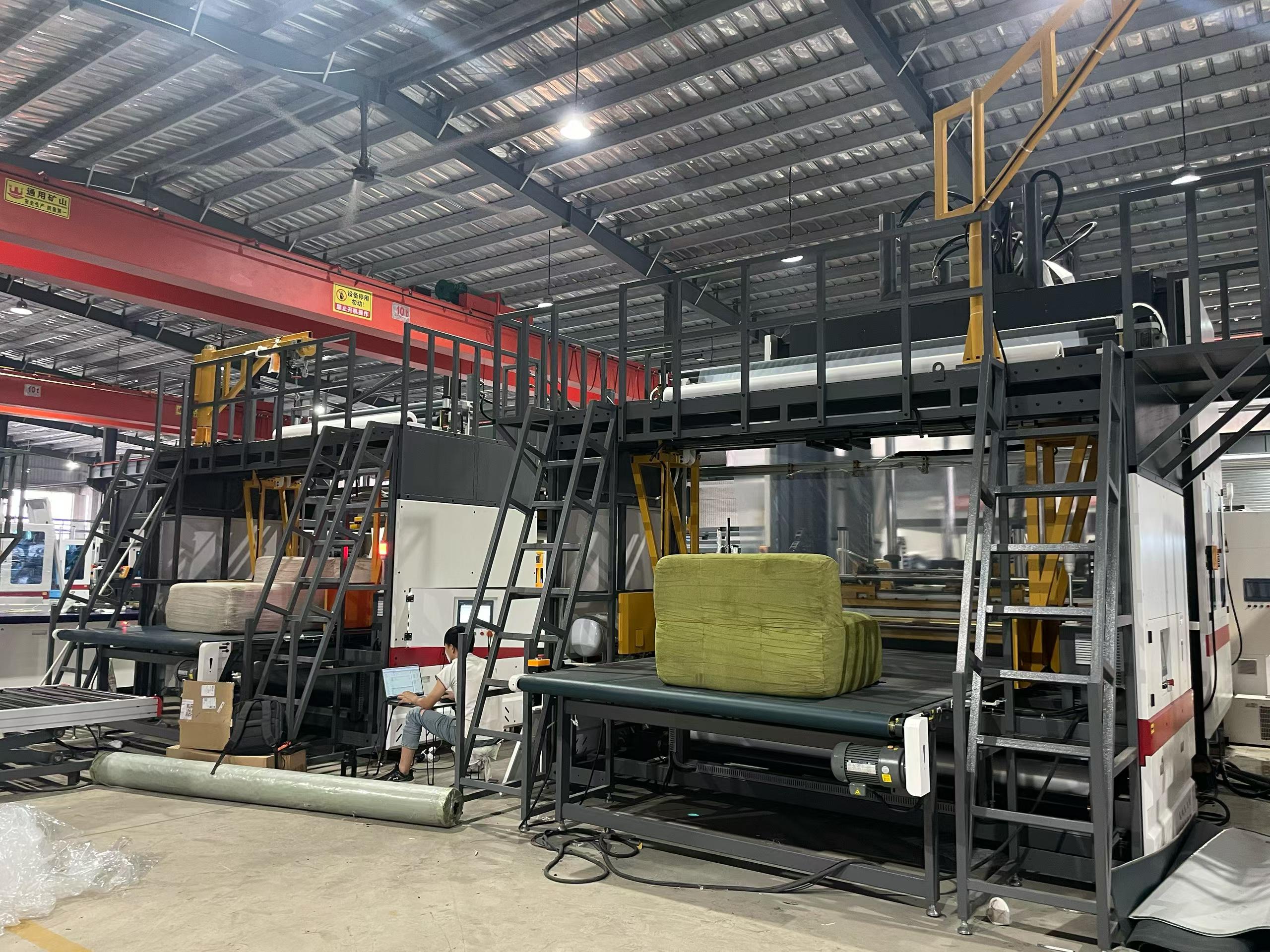
How Compression Pressure Affects Packing Film
During sofa compression, the machine reduces the product's volume while the film stretches around the sofa. As compression pressure increases, the film may experience greater tension and stress, particularly around corners, seams, frames, and other concentrated contact points.
Therefore, compression pressure should not be considered independently. It needs to be evaluated together with the sofa structure, film properties, and packing machine settings. Excessive compression is not automatically better, while insufficient compression may provide limited volume reduction.
1. Film Strength Must Match Compression Requirements
Tensile strength is an important property when selecting film for sofa compression packing.
A film with insufficient strength may stretch excessively or break when subjected to high compression forces. This risk can become more noticeable with large sofas, heavy upholstery, irregular shapes, or products with concentrated pressure points.
Manufacturers should therefore evaluate film strength based on the actual sofa model and required compression conditions rather than selecting film only according to price or thickness.
2. Elongation Helps the Film Adapt to Sofa Shapes
Sofas rarely have completely flat surfaces. Armrests, cushions, corners, frames, and different upholstery structures can create irregular shapes during compression.
Film with suitable elongation can adapt to these changes while maintaining package integrity. However, excessive stretching can also reduce stability or increase the risk of film failure.
The goal is to find a balance between stretchability, strength, and recovery performance for the specific sofa and compression process.
3. Higher Pressure Can Increase Puncture Risk
Compression can push parts of the sofa structure against the film. Wooden frames, metal components, springs, corners, zippers, and other hard areas can create localized stress.
If compression pressure is increased without considering these contact points, the risk of puncture or tearing may increase.
Puncture resistance is therefore particularly important when packing:
-
Large sectional sofas
-
L-shaped sofas
-
Sofas with rigid frames
-
Heavy upholstered furniture
-
Products with prominent corners or edges
A suitable film should be able to withstand these pressure points during compression, handling, and transportation.
4. Film Thickness Is Only One Part of the Equation
It is common to assume that thicker film will always perform better under higher compression pressure. In practice, film thickness is only one factor.
A thicker film can provide additional mechanical resistance, but it may also increase material consumption and require different stretching or sealing parameters. A thinner film may work effectively when its strength and puncture resistance are suitable for the application.
Manufacturers should evaluate:
-
Film thickness
-
Tensile strength
-
Elongation
-
Puncture resistance
-
Tear resistance
-
Sealing performance
-
Film consistency
The appropriate specification depends on the sofa, compression ratio, machine, and transportation conditions.
5. Compression Pressure and Sealing Performance
Film performance is not only about resisting compression. The final package also needs reliable seals.
If compression parameters, film properties, and sealing temperature are not properly matched, the package may develop weak sealing points or lose its intended stability.
For automated sofa compression packing, the film should be compatible with the machine's feeding, stretching, compression, and sealing systems. Consistent film thickness and mechanical properties can also contribute to more predictable automated packing results.
6. Machine Settings Should Be Adjusted With Film Properties
Compression pressure should be treated as part of a complete packing system.
Other parameters may include:
-
Compression pressure
-
Compression time
-
Film tension
-
Film stretching
-
Sealing temperature
-
Packing speed
-
Film width
-
Film thickness
Changing one parameter can affect the others. For example, increasing compression without adjusting film tension or checking the film's mechanical properties may increase the possibility of film damage.
For this reason, manufacturers should establish suitable settings through testing with the actual sofa model and selected film.
7. Match Film Performance to Different Sofa Types
Different sofa constructions can require different packing conditions.
Sofa Characteristic
|
Film Consideration
|
Large sofa
|
Higher strength and puncture resistance
|
Irregular shape
|
Suitable elongation and flexibility
|
Sharp corners
|
Strong puncture and tear resistance
|
Heavy structure
|
Appropriate tensile strength
|
High compression ratio
|
Stable mechanical performance
|
Long-distance shipping
|
Reliable sealing and package stability
|
This means there is no universal film specification suitable for every sofa.
Manufacturers should consider the sofa's dimensions, weight, construction, upholstery, compression ratio, and transportation environment when selecting film.
8. Test the Complete Compression System
Before purchasing large quantities of film or applying a new compression setting to mass production, manufacturers should conduct practical trials.
A useful test can evaluate:
-
Film breakage during compression
-
Puncture resistance around corners
-
Film stretching and recovery
-
Seal strength
-
Package stability
-
Finished package dimensions
-
Film consumption per sofa
-
Product recovery after unpacking
Testing the complete system is more reliable than evaluating film properties separately because the actual result depends on the interaction between the sofa, film, machine, and compression parameters.
Conclusion
The relationship between sofa compression pressure and film performance is important for achieving stable compression packing results. Higher compression can place greater stress on the film, making tensile strength, elongation, puncture resistance, thickness, and sealing performance increasingly important.
However, higher pressure does not automatically produce better packing. The appropriate compression level should be determined according to the sofa structure, film specification, machine capabilities, and required package performance.
For furniture manufacturers, the most reliable approach is to test the sofa, compression settings, packing film, and machine as one complete system. This can help create stable packages while balancing packing efficiency, film consumption, product protection, and transportation requirements.


