Categories
How Sofa Compression Technology Fits into a Modern Production Workflow |NAIGU
How Sofa Compression Technology Fits into a Modern Production Workflow explains how sofa compression technology can be integrated into modern furniture manufacturing, from quality inspection and compression to film packing, warehouse storage, and container loading. It highlights how compression roll packing can help manufacturers reduce product volume, improve warehouse utilization, lower transportation costs, and increase overall production efficiency.
Sep 3rd,2026
47 Views
Sofa compression technology is becoming an important part of modern furniture manufacturing as sofa manufacturers look for ways to improve production efficiency, optimize warehouse space, and reduce transportation costs.
Traditional sofas are bulky products that can occupy significant space during storage and shipping. By integrating sofa compression into the production workflow, manufacturers can reduce product volume and create a more efficient process from final assembly to delivery.
But how does sofa compression technology fit into a modern sofa production workflow?
1. From Sofa Manufacturing to Final Packing
A typical sofa production process may include frame manufacturing, foam cutting, upholstery, assembly, inspection, and final packing.
Traditionally, packing is often treated as the final independent step. However, modern furniture factories are increasingly connecting packing with the overall production workflow.
After the sofa passes quality inspection, it can be transferred directly to a compression packing system. This reduces unnecessary movement and helps create a continuous workflow from production to finished goods storage.
2. Quality Inspection Before Compression
Sofa quality should be checked before compression packing.
Operators can inspect the upholstery, seams, frame, cushions, and overall appearance before the product enters the compression machine.
This step is important because compression packing is designed to reduce product volume for handling and transportation. Establishing quality control before compression helps manufacturers ensure that only qualified products enter the packing process.
3. Sofa Compression Reduces Product Volume
One of the main advantages of sofa compression technology is volume reduction.
Sofas contain large amounts of flexible materials such as foam and upholstery. Depending on the sofa structure and materials, controlled compression can significantly reduce the space occupied by the product.
A smaller packed volume can make products easier to store and transport.
For manufacturers shipping sofas internationally, this can be particularly valuable because transportation costs are often influenced by cargo volume as well as weight.
4. Integration with Roll Packing
Compression technology can be combined with roll packing to create a more compact finished package.
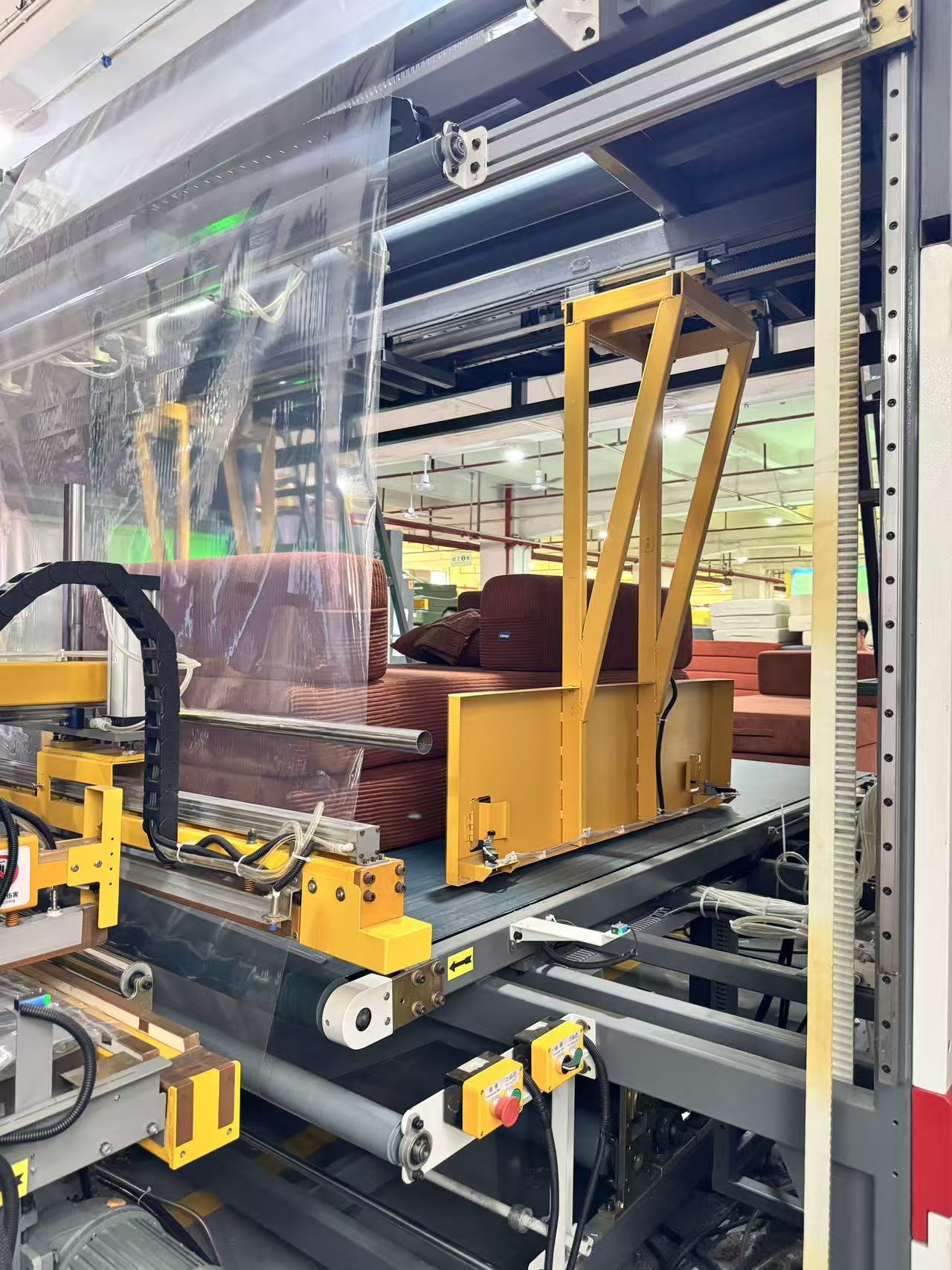
A sofa compression roll packing machine compresses the product and forms it into a more manageable package. The finished roll can then be sealed with suitable packing film for storage or transportation.
This approach can make bulky sofas easier to move through warehouses and load into shipping containers.
For factories producing large quantities of sofas, compression roll packing can also reduce the amount of manual handling required between production and logistics.
5. Improving Warehouse Efficiency
Warehouse space is an important cost for furniture manufacturers.
Uncompressed sofas can require considerable floor space, particularly when factories produce large quantities for distributors or export orders.
By reducing the packed volume, sofa compression technology can help manufacturers store more products within the same warehouse area.
Better space utilization can reduce pressure on warehouse capacity and make finished-product management more organized.
6. Supporting Container Loading
Transportation efficiency is another important reason manufacturers adopt sofa compression technology.
Large sofas can quickly consume container space when shipped in their original dimensions. Smaller compressed packages allow manufacturers to make better use of available container volume.
Depending on sofa design, compression ratio, package dimensions, and loading method, manufacturers may be able to increase the number of units shipped per container.
This can help reduce transportation costs on a per-unit basis.
7. Reducing Manual Handling
Traditional sofa packing may involve several manual steps, including moving the sofa, preparing packing materials, wrapping the product, and positioning it for storage or shipment.
Automated or semi-automatic compression packing equipment can simplify these operations.
By integrating compression and packing into one workflow, manufacturers can reduce repetitive manual handling and improve the consistency of the finished package.
This is particularly useful for factories with high daily production volumes.
8. Choosing the Right Compression Method
Not every sofa can be compressed in exactly the same way.
Manufacturers should consider:
-
Sofa structure
-
Frame materials
-
Foam characteristics
-
Upholstery materials
-
Sofa dimensions
-
Compression requirements
-
Recovery characteristics
-
Required package size
-
Production volume
For example, modular sofas, sectional sofas, and sofas with different frame structures may require different compression and packing configurations.
The equipment should therefore be selected according to the actual sofa design rather than using a single compression method for every product.
9. Connecting Compression with Production Automation
Modern sofa factories are increasingly moving toward connected production systems.
Sofa compression packing can become one stage within a broader automated workflow:
Sofa Manufacturing → Assembly → Quality Inspection → Compression → Film Packing → Roll Packing → Storage → Container Loading
Connecting these processes can reduce unnecessary product movement and create a more predictable material flow.
For high-volume furniture manufacturers, this type of workflow can improve production planning and make automation easier to scale.
10. Preparing for International Furniture Distribution
Sofa compression technology is particularly useful for manufacturers serving international markets.
Export-oriented factories need to consider not only production costs but also warehouse space, container utilization, handling efficiency, and transportation expenses.
A compact finished package can simplify several stages of the supply chain.
For online furniture brands and exporters, efficient compression packing can also make it easier to manage bulky products across multiple distribution locations.
How to Introduce Sofa Compression into a Factory
Manufacturers do not necessarily need to automate the entire factory at once.
A practical approach is to identify the biggest bottleneck in the current workflow.
If manual packing is slowing production, a sofa compression roll packing machine may be a suitable starting point. If warehouse space is the main problem, manufacturers can evaluate how much volume reduction can realistically be achieved.
Factories should also evaluate production capacity, sofa types, available space, packing film requirements, and future production plans before selecting equipment.
Conclusion
Sofa compression technology fits into a modern production workflow by connecting final product inspection with compression, film packing, storage, and transportation.
The technology can help manufacturers reduce sofa volume, improve warehouse utilization, reduce repetitive handling, and optimize container loading. When integrated with other production processes, sofa compression can become an important part of a more efficient furniture manufacturing system.
NAIGU provides sofa compression and roll packing solutions designed for furniture manufacturers with different sofa structures, production capacities, and packing requirements.
Looking to integrate sofa compression into your production workflow? Contact NAIGU to discuss a suitable sofa compression packing solution for your factory.


