Categories
Future Trends in Mattress Production Automation |NAIGU
Future Trends in Mattress Production Automation explores how smart manufacturing, robotics, AI-assisted optimization, flexible production lines, predictive maintenance, and automated mattress compression and packing are shaping the future of mattress factories. It explains how manufacturers can use automation to improve efficiency, reduce labor costs, increase production consistency, and prepare for future expansion.
Sep 3rd,2026
56 Views
Mattress manufacturing is becoming increasingly automated as manufacturers look for higher production efficiency, consistent product quality, lower labor costs, and greater production flexibility. From automated quilting and tape edging to compression and packing, modern mattress factories are gradually connecting individual machines into integrated production systems.
So, what will mattress production automation look like in the future? The next generation of mattress factories is likely to focus on intelligent production lines, greater machine integration, data-driven manufacturing, robotics, and flexible automation.
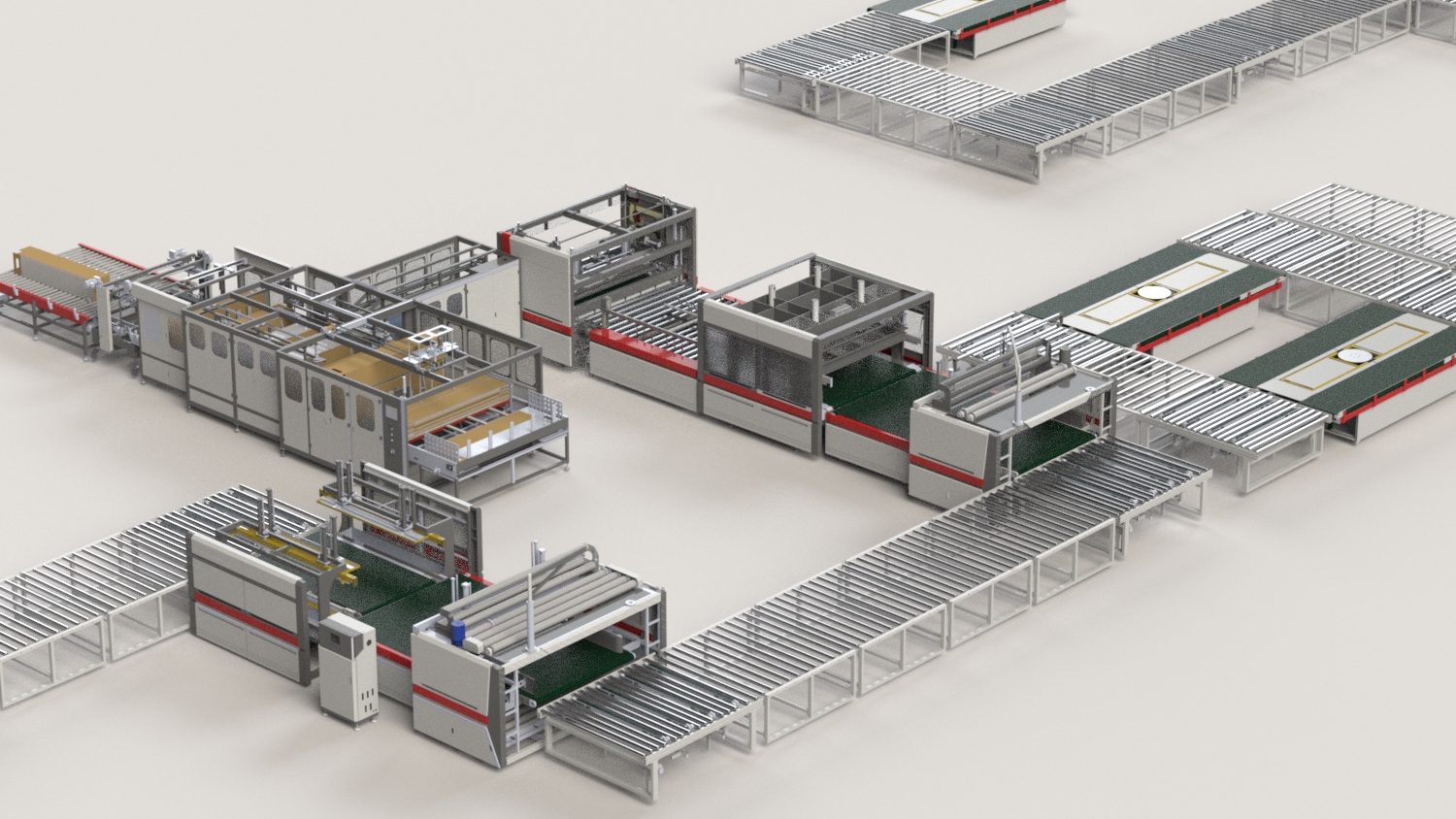
1. More Integrated Mattress Production Lines
One of the most important trends is the integration of individual machines into complete mattress production lines.
Instead of operating quilting, cutting, assembly, tape edging, inspection, compression, and packing equipment as completely separate processes, manufacturers can connect multiple stages into a coordinated workflow.
An integrated mattress production line can reduce manual handling, shorten production cycles, and improve material flow between processes.
For large mattress factories, production-line integration will become increasingly important as manufacturers seek to increase output without continuously increasing labor requirements.
2. Intelligent Automation and Smart Manufacturing
Future mattress factories will use more intelligent equipment capable of monitoring production conditions and adjusting operating parameters.
Sensors and control systems can collect information such as machine speed, operating status, product dimensions, and production output. This data can help operators identify production problems and improve equipment utilization.
Smart manufacturing systems can also provide manufacturers with better visibility into production performance, making it easier to identify bottlenecks and optimize production schedules.
3. Greater Use of Robotics
Robotics will play an increasingly important role in mattress manufacturing.
Mattresses are large and relatively heavy products, making repetitive manual handling physically demanding and time-consuming. Robots and automated handling systems can assist with material transfer, mattress positioning, stacking, and other repetitive operations.
In high-volume factories, robotic handling can improve production consistency while reducing unnecessary manual movement.
The future is not necessarily about replacing every worker with robots. Instead, manufacturers can use robots for repetitive and physically demanding tasks while employees focus on machine supervision, quality control, maintenance, and production management.
4. AI-Assisted Production Optimization
Artificial intelligence is expected to become more useful in manufacturing decision-making.
AI-based systems can analyze production data to identify patterns and potential inefficiencies. For example, manufacturers may use production data to evaluate machine utilization, downtime, material consumption, and output.
Over time, AI-assisted systems could help factories predict maintenance requirements, optimize production schedules, and identify potential bottlenecks before they significantly affect production.
This makes AI an important part of the transition from conventional automation to intelligent mattress manufacturing.
5. Flexible Automation for Different Mattress Sizes
Modern mattress factories often produce multiple mattress sizes, thicknesses, and product types. Future automation systems will need to handle these variations with greater flexibility.
Instead of requiring extensive manual adjustments whenever product specifications change, advanced machines can use programmable settings and automated parameter adjustment.
Flexible automation can help manufacturers produce different mattress models on the same production line while reducing setup time.
This is particularly valuable for manufacturers serving international markets where mattress dimensions and product specifications can vary between countries.
6. More Automated Mattress Compression and Packing
Mattress compression and packing will remain an important area of automation.
Automated mattress packing machines can combine processes such as compression, film packing, sealing, and rolling to reduce manual handling and improve production efficiency.
Compressed mattresses occupy less space during storage and transportation. For manufacturers exporting mattresses internationally, automated compression packing can also help improve container utilization and reduce logistics costs.
As production volumes increase, more factories are expected to integrate mattress compression and packing directly into their production workflows.
7. Data-Driven Predictive Maintenance
Unplanned machine downtime can interrupt production and increase operating costs.
Future automated mattress production lines will increasingly use sensors and monitoring systems to track equipment performance. By analyzing machine data, manufacturers can identify unusual operating conditions and perform maintenance before a serious equipment failure occurs.
Predictive maintenance can help factories reduce unexpected downtime, extend equipment service life, and improve production planning.
8. Digital Production Monitoring
Digital dashboards will become increasingly common in modern mattress factories.
Production managers can monitor key indicators such as:
-
Production output
-
Machine operating status
-
Downtime
-
Production speed
-
Material consumption
-
Maintenance requirements
-
Order progress
Having this information in one system allows managers to make faster and more informed production decisions.
For factories with multiple production lines, centralized monitoring can also make it easier to compare performance and identify inefficient processes.
9. Energy-Efficient Automation
Energy efficiency will become another important consideration as manufacturers focus on long-term operating costs.
Future mattress production machines are likely to place greater emphasis on efficient motors, optimized machine cycles, energy monitoring, and intelligent standby functions.
Reducing unnecessary energy consumption can help manufacturers lower operating expenses while supporting more sustainable production practices.
10. Modular and Scalable Factory Automation
Not every mattress manufacturer can invest in a fully automated factory immediately. As a result, modular automation will become increasingly attractive.
Manufacturers can start with automation for a specific production stage, such as quilting, tape edging, compression, or packing, and gradually integrate additional equipment as production requirements increase.
A scalable approach allows factories to control capital investment while building toward a more automated production system.
What Will the Future Mattress Factory Look Like?
The future mattress factory will likely be more connected, flexible, data-driven, and automated.
Machines will communicate more effectively with production management systems. Robots will handle more repetitive material movement. AI will help analyze production data, while automated compression and packing systems will improve downstream efficiency.
However, automation should always be selected according to the manufacturer's actual production requirements. A high-volume factory may benefit from a fully integrated mattress production line, while a smaller manufacturer may achieve better results by automating specific bottlenecks first.
How Manufacturers Can Prepare for the Future
Manufacturers considering production automation should evaluate their current workflow before investing in new equipment.
Important factors include:
-
Current production capacity
-
Target production output
-
Mattress sizes and product types
-
Available labor
-
Factory layout
-
Existing machinery
-
Required automation level
-
Future expansion plans
-
Compression and packing requirements
-
Expected return on investment
The most effective automation strategy is not simply to purchase more machines. It is to create a production system in which equipment, materials, workers, and data work together efficiently.
Conclusion
Future trends in mattress production automation will focus on integrated production lines, intelligent control systems, robotics, AI-assisted optimization, flexible manufacturing, predictive maintenance, and automated compression and packing.
For mattress manufacturers, investing in the right automation strategy can improve production efficiency, reduce repetitive labor, increase consistency, and create a stronger foundation for future factory expansion.
NAIGU provides mattress production and packing solutions for manufacturers looking to improve factory automation. From mattress production equipment to compression and packing machines, the right equipment combination can be designed according to product specifications, production capacity, and automation requirements.
Looking to build a more efficient mattress production line? Contact NAIGU to discuss an automation solution for your factory.


