Categories
Why Packing Efficiency Matters for Mattress Manufacturers |NAIGU
Why Packing Efficiency Matters for Mattress Manufacturers explains why an efficient mattress packing process is essential for reducing labor and material costs, increasing production capacity, saving warehouse space, and optimizing transportation. It also highlights how mattress compression and automated packing solutions can help manufacturers improve overall production and logistics efficiency.
Sep 3rd,2026
52 Views
For mattress manufacturers, packing is more than the final step before a product leaves the factory. An efficient packing process can directly influence labor costs, material consumption, warehouse space, transportation expenses, production capacity, and customer satisfaction.
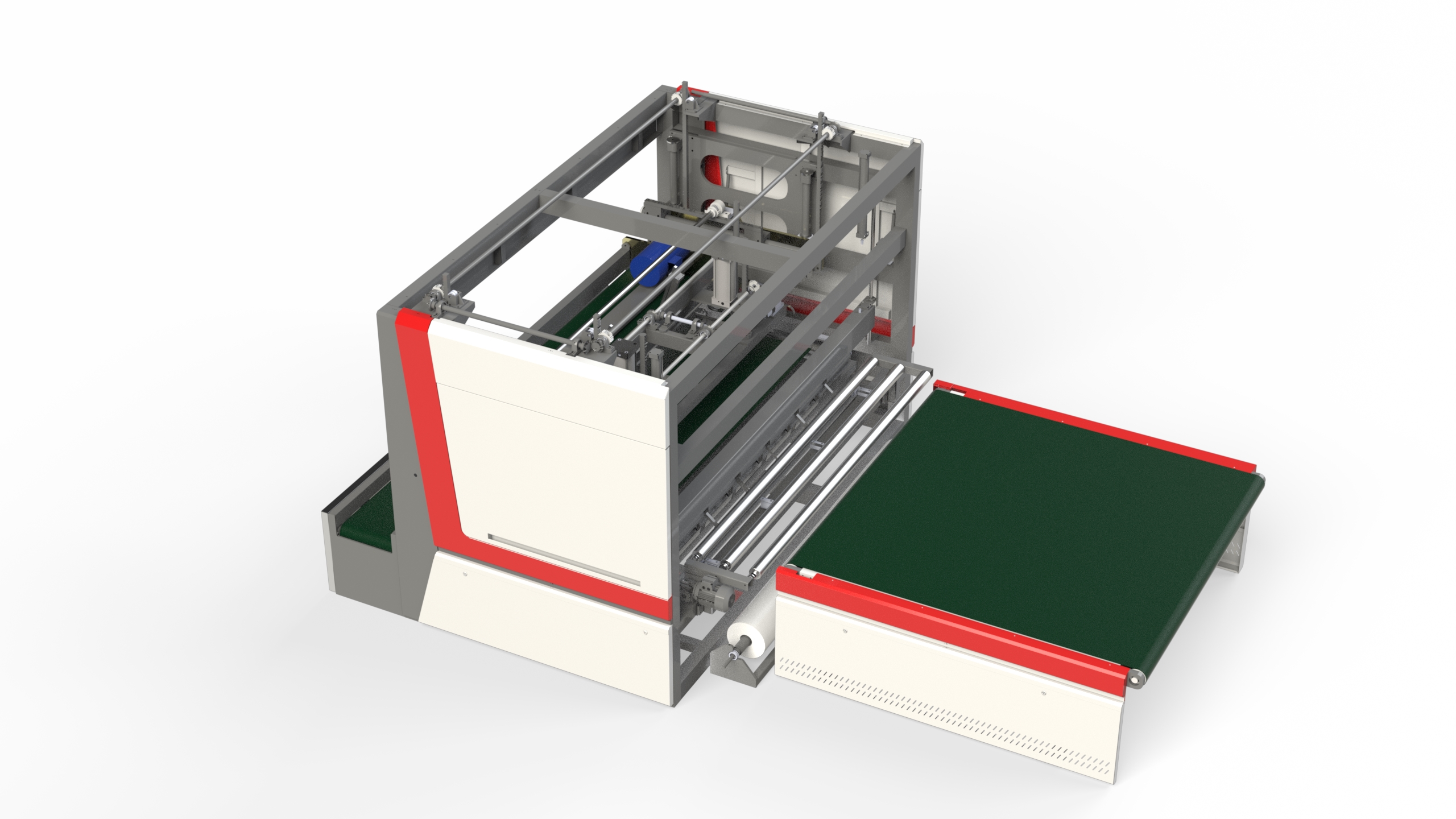
As mattress factories become more automated and international distribution continues to grow, improving packing efficiency has become an important part of modern mattress manufacturing.
So, why does packing efficiency matter so much for mattress manufacturers?
1. Packing Efficiency Helps Reduce Production Costs
Labor is one of the major operating costs in mattress manufacturing. Traditional manual packing often requires workers to move mattresses, prepare packing materials, wrap products, seal bags, and organize finished goods.
Automated mattress packing machines can perform multiple repetitive operations with greater consistency. This can reduce manual handling and allow manufacturers to use their workforce more efficiently.
For factories with high production volumes, even small improvements in packing time per mattress can create significant savings over thousands of units.
2. Efficient Packing Reduces Material Waste
Packing film is another important operating cost.
Inconsistent manual packing can result in excessive film consumption, uneven film tension, or unnecessary material waste. Automated packing equipment can control film feeding, cutting, sealing, and other processes more precisely.
Using the appropriate PE film thickness, width, strength, and packing method can further improve material efficiency.
Manufacturers should therefore evaluate both machine performance and film specifications when looking for ways to reduce packing costs.
3. Faster Packing Improves Overall Production Capacity
A mattress production line can only achieve its full potential when downstream processes can keep up with manufacturing output.
If mattress production is fast but final packing is slow, finished mattresses may accumulate between production and packing. This creates a bottleneck and reduces overall factory efficiency.
An efficient mattress packing system helps maintain a more balanced production flow. Automated compression and packing equipment can process mattresses more consistently and support higher daily production volumes.
4. Compression Packing Saves Warehouse Space
Mattresses are bulky products and can occupy substantial warehouse space when stored in their original dimensions.
Mattress compression packing reduces the volume of suitable mattresses before storage and transportation. Depending on the mattress construction and compression method, manufacturers can significantly improve space utilization.
More compact packed mattresses can help factories:
-
Store more products in the same area
-
Reduce finished-goods congestion
-
Improve warehouse organization
-
Make product handling easier
-
Reduce pressure on storage capacity
For manufacturers operating in areas where warehouse space is expensive, this can provide an important economic advantage.
5. Efficient Packing Can Lower Transportation Costs
Transportation is a major consideration for mattress manufacturers, particularly those exporting products internationally.
The large volume of conventional mattresses can limit the number of units that fit into a truck or shipping container. Compression packing reduces the packed volume, potentially allowing manufacturers to load more units within the available cargo space.
This can improve container utilization and reduce transportation costs per mattress.
For export-oriented factories, packing efficiency should therefore be considered as part of the overall logistics strategy rather than as an isolated production process.
6. Consistent Packing Improves Product Protection
Efficient packing is not simply about speed. Packing quality is equally important.
A properly packed mattress should be protected against dust, moisture, and handling conditions during storage and transportation. Consistent film application and reliable sealing can help maintain package integrity throughout the supply chain.
For manufacturers supplying distributors and retailers, stable packing quality can also create a more professional product presentation.
7. Automation Reduces Repetitive Manual Handling
Mattresses are large products that can be difficult to move repeatedly by hand.
Automated packing systems can reduce the amount of manual handling required between mattress production, compression, packing, and storage.
Reducing unnecessary movement can improve workflow efficiency and allow operators to focus on machine supervision, quality inspection, and other important tasks.
8. Efficient Packing Supports International Distribution
Modern mattress manufacturers often serve customers across multiple regions and countries.
Exporting mattresses requires manufacturers to consider container capacity, transportation costs, warehouse requirements, and product protection.
An efficient packing process helps connect manufacturing with logistics. When mattresses are compressed and packed into compact units, they can become easier to store, handle, and transport across long distances.
This is particularly valuable for manufacturers supplying overseas distributors, furniture retailers, and online furniture businesses.
9. The Right Packing Machine Makes a Difference
Not every mattress factory requires the same level of packing automation.
A manufacturer should consider:
-
Mattress size and thickness
-
Mattress construction
-
Daily production volume
-
Required packing speed
-
Compression requirements
-
Available factory space
-
Packing film specifications
-
Labor availability
-
Future production expansion
Small and medium-sized factories may benefit from semi-automatic packing equipment, while high-volume manufacturers may require fully automatic mattress compression and packing systems.
The objective is to select equipment that matches the actual production workflow rather than simply choosing the most automated machine available.
10. Packing Efficiency Is Part of Total Manufacturing Efficiency
The most efficient mattress factories do not look at packing costs separately from production and logistics.
Instead, they evaluate the entire workflow:
Mattress Production → Quality Inspection → Compression → Film Packing → Storage → Transportation
Improving one stage can influence the performance of the entire system.
For example, faster compression packing can reduce finished-product accumulation, while smaller packed volumes can improve warehouse and container utilization. These combined improvements can create greater savings than focusing only on the packing machine's operating speed.
How Can Mattress Manufacturers Improve Packing Efficiency?
Manufacturers can start by analyzing their current packing process and identifying the biggest bottleneck.
Useful questions include:
-
How long does it take to pack one mattress?
-
How much film is consumed per mattress?
-
How many workers are involved in packing?
-
Is packing slowing down the production line?
-
How much warehouse space is occupied by finished mattresses?
-
How many mattresses can be loaded into one container?
-
How often does packing damage or material waste occur?
-
Can compression and packing be integrated into one process?
The answers can help manufacturers determine whether they need better packing materials, semi-automatic equipment, or a fully automated mattress packing solution.
Conclusion
Packing efficiency matters for mattress manufacturers because it affects much more than the final appearance of a product. Efficient packing can reduce labor and material costs, increase production capacity, improve warehouse utilization, optimize transportation space, and provide more consistent product protection.
For mattress factories planning to expand production or enter international markets, investing in the right packing technology can become an important part of long-term manufacturing efficiency.
NAIGU provides mattress compression and packing solutions for manufacturers with different product specifications, production capacities, and automation requirements.


