Categories
How Mattress Roll Packing Machines Help Reduce Shipping Costs |NAIGU
Learn how mattress roll packing machines reduce shipping costs by minimizing package volume, improving container utilization, saving warehouse space, and streamlining logistics.
Sep 24th,2026
47 Views
Shipping bulky mattresses can be expensive for manufacturers, exporters, and distributors. Traditional flat-packed mattresses occupy significant space in trucks, containers, and warehouses. Mattress roll packing machines address this challenge by compressing and rolling mattresses into more compact packages, helping factories improve space utilization and logistics efficiency.
1. Reduce Mattress Volume
The main logistics benefit of roll packing is reducing the volume of the finished mattress package. Depending on mattress construction, thickness, and the target roll size, compression can significantly reduce the space required for transportation.
A smaller package can help manufacturers:
Load more mattresses into available transportation space
Reduce unused container capacity
Lower transportation cost per mattress
Improve overall logistics efficiency
The actual volume reduction should be tested with the manufacturer's specific mattress models rather than assuming a fixed percentage.
2. Improve Container Loading Efficiency
For mattress exporters, container utilization is an important cost consideration. Roll-packed mattresses have a compact cylindrical format that can be arranged more efficiently than large flat mattresses.
Better loading efficiency can help factories optimize:
20-foot and 40-foot container loading
Truck transportation
Warehouse-to-port logistics
International distribution
The more efficiently available cubic space is used, the lower the transportation cost can be on a per-unit basis.
3. Reduce Warehouse Space Requirements
Shipping is only one part of the logistics process. Mattresses often need to be stored before shipment, during distribution, or at retail facilities.
Compressed roll-packed mattresses require less floor and storage space than uncompressed products. This allows manufacturers and distributors to make better use of existing warehouse capacity.
For factories handling large production volumes, better space utilization can also simplify inventory movement and handling.
4. Reduce Manual Handling
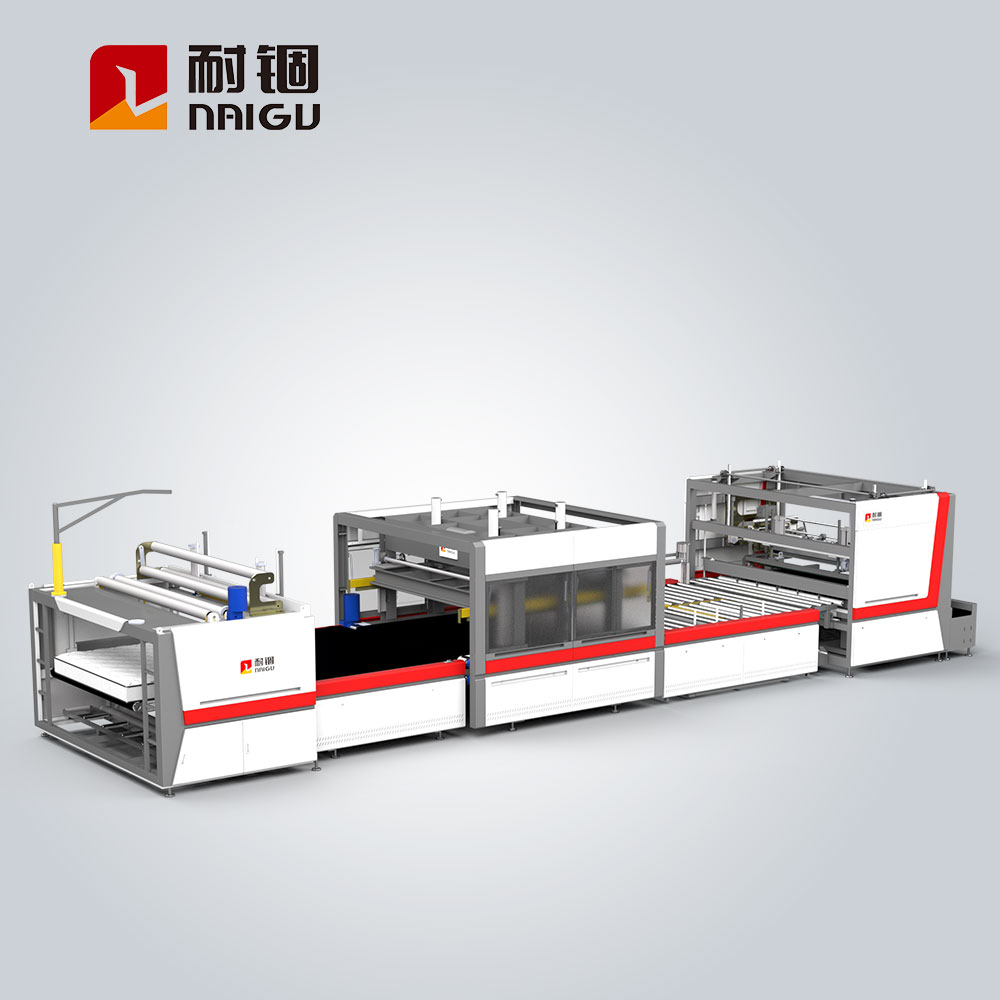
Modern mattress roll packing machines can combine several processes, including bagging, compression, sealing, folding, and rolling. Automation reduces the amount of manual handling required between individual packing stages.
For high-volume mattress manufacturers, this can help create a more consistent packing workflow while improving production efficiency.
5. Make Mattresses Easier to Handle
A compact roll-packed mattress is generally easier to move than a large flat mattress. Its smaller dimensions can simplify factory handling, warehouse transfers, container loading, and downstream distribution.
This is particularly useful for manufacturers serving e-commerce and direct-to-consumer markets, where compact mattress delivery has become an important logistics model.
6. Optimize Packaging and Product Protection
Roll packing is normally combined with PE film or other suitable packing materials. Compression and sealing create a compact package while helping protect the mattress from dust and moisture during transportation and storage.
Factories should select film specifications according to the mattress type, compression requirements, sealing method, and transportation conditions.
7. Reduce Overall Logistics Costs
The potential cost advantage of mattress roll packing comes from several factors working together:
Volume reduction → Better container utilization → Lower storage requirements → More efficient handling → Lower logistics cost per unit
However, the actual savings depend on freight rates, mattress dimensions, compression ratio, production volume, destination, and container-loading conditions.
Manufacturers should therefore calculate savings using their own shipping data rather than relying on a standard percentage.
8. Choose the Right Mattress Roll Packing Machine
Before purchasing equipment, mattress manufacturers should evaluate:
Mattress size and thickness
Foam, latex, spring, or hybrid construction
Daily production capacity
Required roll diameter
Film specifications
Compression requirements
Automatic or semi-automatic operation
Existing production-line layout
For large-scale factories, a fully automatic compression and roll-packing line can connect packing operations more closely with the mattress production process.
Conclusion
Mattress roll packing machines can help manufacturers reduce shipping costs by making bulky mattresses more compact and improving the use of transportation and warehouse space. Combined with automated compression, sealing, and rolling, the technology can also streamline packing operations and reduce manual handling.
For mattress manufacturers serving export, wholesale, and e-commerce markets, choosing the right mattress compression and roll packing solution can be an important step toward more efficient logistics and a more scalable supply chain.


