Categories
How Mattress Compression Machines Change Modern Mattress Logistics |NAIGU
Discover how mattress compression machines reduce packed volume, improve warehouse and container utilization, and make mattress logistics more efficient.
Sep 24th,2026
42 Views
Mattresses are large, bulky products that can create significant challenges for transportation, warehousing, and distribution. As mattress manufacturers expand into export and e-commerce markets, improving packing efficiency has become an important part of modern logistics.
Mattress compression machines help manufacturers reduce the packed volume of mattresses before transportation. When combined with sealing and roll packing, the technology can create compact packages that are easier to store, handle, and ship.
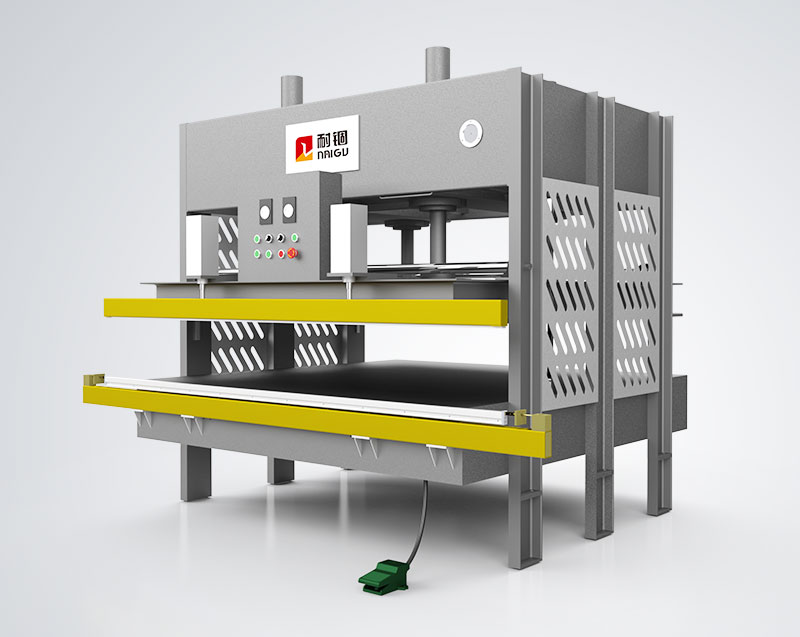
1. Reduce Mattress Volume for Transportation
The primary logistics advantage of mattress compression is volume reduction. A compressed mattress takes up substantially less space than an unpacked mattress, although the actual reduction depends on the mattress construction, thickness, and materials.
For manufacturers shipping large quantities, lower volume can improve the utilization of trucks and shipping containers. This can help reduce transportation costs on a per-unit basis.
2. Improve Container Loading Efficiency
Traditional mattresses are difficult to stack and transport because of their large dimensions. Compression and roll packing create a more compact format that can be arranged more efficiently during loading.
For export-oriented mattress factories, better space utilization can help:
-
Increase the number of mattresses loaded per shipment
-
Reduce unused transportation space
-
Improve container loading efficiency
-
Lower logistics costs per mattress
Some current mattress compression and roll-packing systems are specifically designed to produce compact cylindrical packages for shipping and storage.
3. Reduce Warehouse Space Requirements
Logistics optimization does not stop when the mattress leaves the factory. Compressed mattresses also require less storage space before distribution.
More compact inventory can help manufacturers and distributors make better use of existing warehouse capacity. This is particularly useful for businesses handling large mattress inventories or operating in locations where warehouse space is expensive.
4. Support E-Commerce and Direct Delivery
The growth of online mattress sales has increased demand for compact mattress packing. Roll-packed mattresses can be placed into cartons or other compact shipping formats, making them easier to handle throughout the distribution process.
This creates a logistics model in which mattresses can move from the factory through distribution networks with less bulk than traditional flat mattresses.
5. Reduce Manual Handling
Modern mattress packing equipment can combine several operations, including compression, sealing, and roll packing. Depending on the machine configuration, automation can reduce manual handling and create more consistent packing results.
For high-volume factories, this can help streamline the packing section and connect mattress production more closely with downstream logistics.
6. Improve Packaging Protection
Compression packing is normally combined with PE film, PE bags, or other suitable packing materials. Proper sealing helps maintain the compressed package and provides protection against dust and moisture during storage and transportation.
This gives manufacturers a more controlled packing format while products move through warehouses, containers, distribution centers, and retail channels.
7. Create a More Efficient Mattress Supply Chain
Mattress compression machines can influence several stages of the supply chain at the same time:
Mattress production → Compression → Sealing → Roll packing → Storage → Container loading → Distribution
By reducing product volume and improving packing consistency, manufacturers can coordinate production and logistics more efficiently.
For factories with higher production volumes, fully automatic compression and roll-packing systems can further connect packing operations with the mattress production line.
8. Choose Equipment Based on Actual Mattress Specifications
Not every mattress requires the same compression solution. Before investing in a mattress compression machine, manufacturers should evaluate:
-
Mattress dimensions
-
Mattress thickness
-
Foam, latex, or spring construction
-
Daily production volume
-
Required roll diameter
-
Packing film specifications
-
Desired automation level
-
Container loading requirements
Actual mattress samples and production data are useful when selecting equipment because compression performance can vary between mattress types.
Conclusion
Mattress compression machines are changing modern mattress logistics by transforming bulky mattresses into more compact, manageable packages. By reducing packed volume, improving warehouse utilization, increasing loading efficiency, and supporting automated packing, compression technology can help mattress manufacturers build a more efficient supply chain.
For manufacturers targeting export, wholesale, and e-commerce markets, integrating mattress compression and roll packing into the production process can be an important step toward more efficient storage, handling, and transportation.


