Categories
How Manufacturers Reduce Costs with Automated Packing Solutions |NAIGU
Discover how automated packing solutions help manufacturers reduce labor, material, transportation, and operating costs while improving packing efficiency and production capacity.
Sep 3rd,2026
50 Views
For manufacturers, reducing production costs is not only about lowering material prices. Labor, production efficiency, packing film consumption, storage, transportation, and product damage can all have a significant impact on total operating costs. Automated packing solutions help manufacturers control these costs by making the packing process faster, more consistent, and easier to manage.
For mattress, sofa, foam, and other bulky-product manufacturers, automated packing machines can be especially valuable because they can combine compression, folding, sealing, rolling, and film packing into a more efficient workflow.
1. Reduce Labor Costs
Manual packing requires workers to repeatedly handle products, adjust packing materials, seal bags, and move finished products. As production volumes increase, manufacturers may need additional operators to maintain output.
Automated packing machines can perform many repetitive packing operations with limited operator intervention. One operator may be able to supervise several stages of the process instead of manually completing every packing step.
This helps manufacturers reduce labor requirements while allowing employees to focus on machine operation, quality inspection, and other higher-value tasks.
2. Increase Production Efficiency
Production speed directly affects manufacturing costs. Slow packing processes can create bottlenecks even when upstream production lines are operating efficiently.
Automated packing solutions provide more consistent operating speeds than manual packing. For example, automated mattress packing systems can integrate processes such as mattress compression and film packing to reduce unnecessary product handling.
Higher packing efficiency means manufacturers can process more products within the same working hours and make better use of existing production capacity.
3. Reduce Packing Material Waste
Material waste is another important cost factor. Manual packing can result in inconsistent film lengths, excessive film usage, or damaged packing materials caused by improper handling.
Automated packing machines can control film feeding, cutting, sealing, and other operations more precisely. When the machine is properly matched with the correct PE film or other packing material, manufacturers can achieve more consistent material consumption.
For high-volume factories, even a small reduction in film waste per product can generate meaningful savings over time.
4. Improve Product Compression and Transportation Efficiency
Bulky products such as mattresses, sofas, and foam products can occupy substantial warehouse and container space.
Compression packing machines reduce product volume before transportation, allowing manufacturers to load more products into trucks or shipping containers. This can reduce transportation costs per unit and improve container utilization.
For exporters, automated compression and roll packing can be particularly useful because lower product volume can help optimize international shipping space.
5. Reduce Product Damage During Handling
Product damage can create hidden costs through returns, rework, replacement, and customer complaints.
Automated packing systems provide more consistent packing conditions. Proper compression, sealing, and film application can help protect products from dust, moisture, and handling-related damage during storage and transportation.
Consistent packing also helps manufacturers maintain a more stable product appearance when goods arrive at distributors or end customers.
6. Improve Production Consistency
Manual packing quality can vary between operators. Differences in film tension, sealing position, compression level, and packing size may affect the final product.
Automated packing machines use controlled operating parameters to provide more consistent results. Manufacturers can establish standard settings for different product sizes and production requirements.
This consistency is especially important for factories supplying large distributors, retailers, and international markets where stable packing quality is expected.
7. Save Factory Floor Space
Automated packing systems can also improve the utilization of factory space.
Traditional manual packing may require large areas for temporary product storage, manual handling, and packing material preparation. A properly designed automated packing line can organize these processes into a more compact workflow.
Better space utilization allows manufacturers to increase production capacity without necessarily expanding their factory footprint.
8. Reduce Long-Term Operating Costs
The initial investment in an automated packing machine is higher than the cost of a basic manual packing process. However, manufacturers should evaluate the investment based on total operating costs rather than equipment price alone.
A useful cost evaluation can include:
Labor costs
Packing film consumption
Production output
Product damage rate
Transportation costs
Warehouse utilization
Maintenance requirements
Equipment lifespan
When production volume is high, savings from labor, material efficiency, and transportation can gradually offset the initial investment.
9. Choose Automation Based on Production Requirements
Not every factory needs the same level of automation. Small and medium-sized manufacturers may benefit from semi-automatic packing machines, while high-volume factories may require fully automatic systems or integrated production lines.
Before selecting equipment, manufacturers should consider:
Product type and dimensions
Daily production capacity
Required packing speed
Available factory space
Packing film specifications
Compression requirements
Labor availability
Future production expansion plans
Choosing a machine based on actual production requirements helps prevent both underinvestment and unnecessary equipment costs.
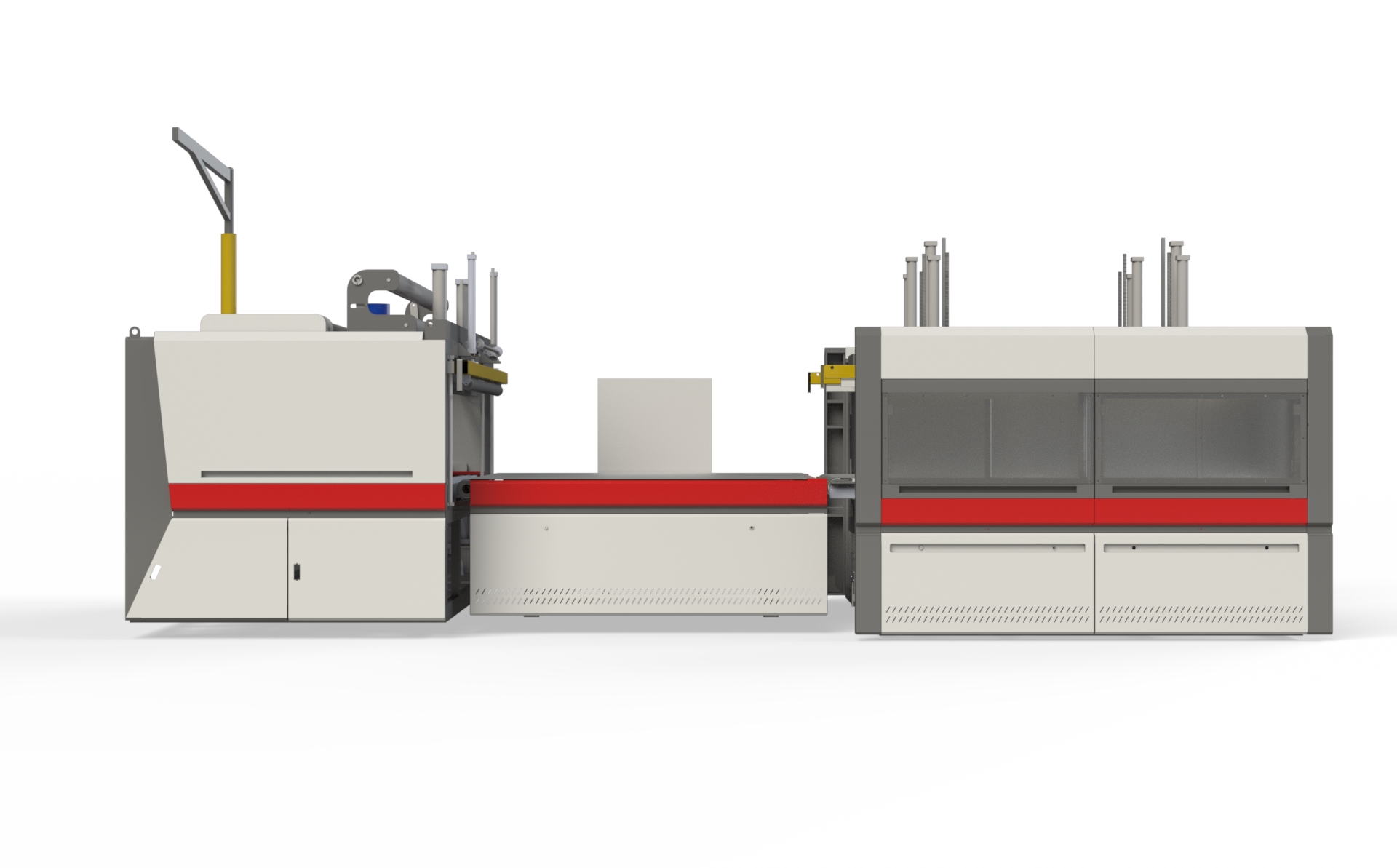
Automated Packing Is an Investment in Manufacturing Efficiency
Automated packing solutions can reduce manufacturing costs by improving labor efficiency, controlling material consumption, increasing production capacity, optimizing transportation space, and improving packing consistency.
For mattress, sofa, foam, and other bulky-product manufacturers, the right automated packing machine can become an important part of a cost-efficient production system.
NAIGU provides automated and semi-automatic packing solutions for mattress and furniture manufacturers, including mattress compression packing machines, sofa compression roll packing machines, foam packing equipment, and related packing film solutions.
Looking to reduce packing costs and improve production efficiency? Contact NAIGU to discuss a packing solution based on your product, production capacity, and factory requirements.


