Categories
How to Choose a Mattress Packing Machine for Different Production Volumes |NAIGU
Learn how to choose a mattress packing machine for low, medium, and high production volumes. Compare automation levels, capacity, packing requirements, and operating costs.
Oct 10th,2026
25 Views
Choosing the right mattress packing machine is essential for improving factory efficiency, controlling labor costs, and maintaining consistent packing quality. However, the best solution depends on a manufacturer's production volume, mattress specifications, available factory space, and automation goals.
For small workshops, a semi-automatic machine may be sufficient. Medium-sized manufacturers may benefit from a combination of automated equipment, while high-output factories often require fully automatic mattress compression roll packing lines.
This guide explains how to select the right mattress packing equipment for different production volumes.
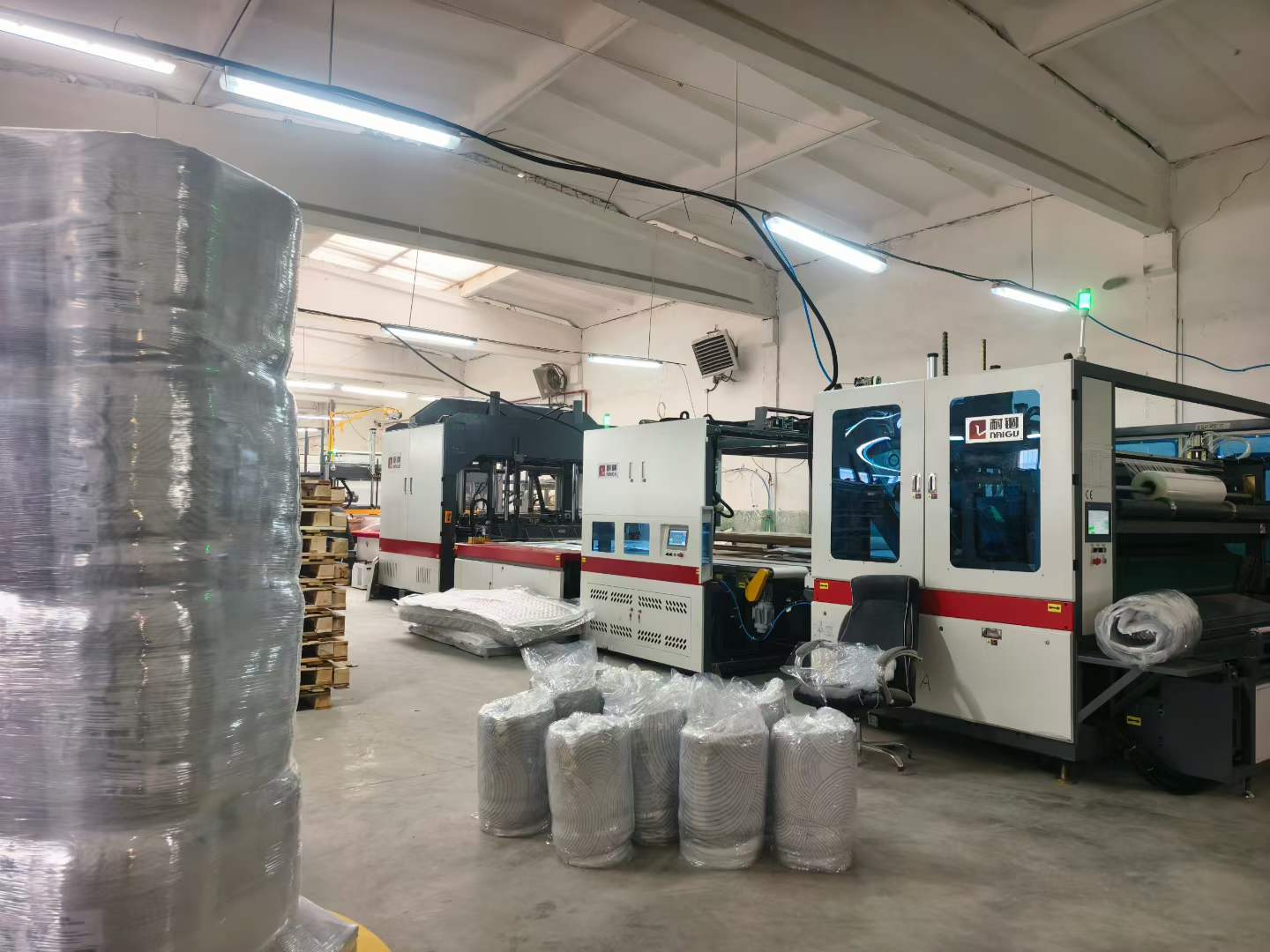
1. Low Production Volume: Flexible and Practical Equipment
Small mattress manufacturers and startup factories often produce limited quantities or offer a wide variety of mattress models. Their primary priorities are usually investment cost, operational flexibility, and ease of use.
A semi-automatic mattress packing machine can be a practical starting point. It allows manufacturers to automate key packing operations while retaining manual control over certain stages.
When evaluating equipment for low-volume production, consider:
-
Compatibility with different mattress sizes and thicknesses
-
Simple operation and routine maintenance
-
Limited installation space
-
Affordable initial investment
-
Potential for future capacity expansion
For factories with changing product specifications, flexible equipment can help accommodate different orders without requiring a fully automated production line from the beginning.
2. Medium Production Volume: Improve Workflow Efficiency
As mattress production increases, manual handling can become a bottleneck. Manufacturers may need faster packing cycles, more consistent package dimensions, and better coordination between production and packing.
At this stage, automatic mattress compression roll packing machines can help reduce repetitive work and improve packing consistency.
Depending on the machine configuration, operations may include compression, folding, rolling, and film packing.
Before choosing a machine, evaluate the following factors:
-
Expected hourly and daily production output
-
Mattress dimensions and material characteristics
-
Required compression and rolling functions
-
-
Compatibility with existing conveyors and production equipment
A suitable automated machine can help manufacturers increase packing efficiency without investing in a complete production line immediately.
3. High Production Volume: Invest in Fully Automatic Packing Lines
Large mattress factories with high output requirements often need an integrated solution that minimizes manual intervention and keeps production moving consistently.
A fully automatic mattress compression roll packing line can combine multiple packing stages into a coordinated workflow. Depending on the configuration, the line may integrate automatic feeding, compression, folding, rolling, and final packing.
The main advantages can include:
-
Reduced repetitive manual handling
-
More consistent packing operations
-
Improved coordination between production stages
-
Better utilization of labor and factory space
-
Greater potential for continuous production
High-output manufacturers should pay particular attention to actual cycle time, machine uptime, changeover time, and downstream handling capacity.
The nominal speed of a machine alone does not determine the final output of the entire factory.
4. Compare Equipment by Production Requirements
The following table provides a general framework for selecting mattress packing equipment. These categories are illustrative rather than fixed production thresholds.
|
Production situation
|
Potential solution
|
Main priority
|
|
Small workshop
|
Semi-automatic machine
|
Flexibility and investment cost
|
|
Growing factory
|
Automatic packing machine
|
Efficiency and consistent packing
|
|
Large-scale factory
|
Fully automatic packing line
|
Throughput and workflow integration
|
To estimate the required capacity, calculate your daily packing demand and available operating time.
For example, if a factory needs to pack 400 mattresses in an 8-hour shift, the average required output is 50 mattresses per hour. The selected equipment should have sufficient practical capacity to meet that target while allowing for product changes, maintenance, and normal production interruptions.
5. Consider Mattress Types and Packing Materials
Production volume is only one factor in machine selection. Mattress construction and packing requirements also affect the appropriate equipment configuration.
Memory foam, polyurethane foam, and hybrid mattresses may have different compression characteristics. Not every mattress is suitable for the same compression ratio or roll packing process.
Manufacturers should confirm:
-
Maximum mattress length, width, and thickness
-
Mattress materials and internal construction
-
Whether folding is required before rolling
-
Target package dimensions
-
Compatible PE film specifications
-
Product recovery and quality requirements after unpacking
Testing representative mattress samples can help verify that the machine meets the factory's packing standards.
6. Calculate the Total Cost of Ownership
A low purchase price does not always mean the lowest long-term cost. Manufacturers should consider the full cost of operating the equipment.
Important factors include:
-
Initial equipment investment
-
-
-
-
Maintenance and spare parts
-
Installation and operator training
-
Expected production output and downtime
For growing factories, automation may help reduce labor per packed mattress and improve operational consistency. The actual return on investment depends on production volume, labor costs, equipment utilization, and the savings achieved.
7. Plan for Future Production Growth
Mattress factories may expand their output as customer demand increases. Selecting equipment with suitable capacity and integration options can help avoid unnecessary replacement or major workflow changes later.
Before purchasing, discuss your current production volume, expected growth, factory layout, and future automation plans with the machine manufacturer.
A customized solution can help balance immediate investment requirements with long-term production goals.
Conclusion
Choosing a mattress packing machine for different production volumes requires balancing capacity, automation, mattress specifications, investment cost, and future growth.
-
Small manufacturers can prioritize flexibility and affordable equipment.
-
Medium-sized factories can focus on automating key packing operations.
-
Large manufacturers can consider fully automatic compression roll packing lines for integrated production.
The most suitable machine is not necessarily the fastest or most expensive. It is the one that reliably meets your actual production requirements and supports your long-term business development.
NAIGU provides mattress packing machinery and automated solutions for manufacturers with different production requirements. From individual mattress packing machines to fully automatic compression roll packing lines, equipment configurations can be selected according to mattress specifications, factory layout, and target output.
Contact NAIGU to discuss your production capacity and find a suitable mattress packing solution for your factory.


