Categories
How Smart Automation Is Transforming Mattress Manufacturing |NAIGU
Discover how smart automation is transforming modern mattress manufacturing. This article explores automated production, data monitoring, labor efficiency, predictive maintenance, and compression roll packing to help mattress factories improve productivity, consistency, and scalability.
Sep 16th,2026
40 Views
Smart automation is changing how modern mattress factories manage production, quality control, and packing. As manufacturers face increasing demand for higher output, consistent quality, and efficient labor utilization, connected machinery and automated production processes are becoming increasingly important.
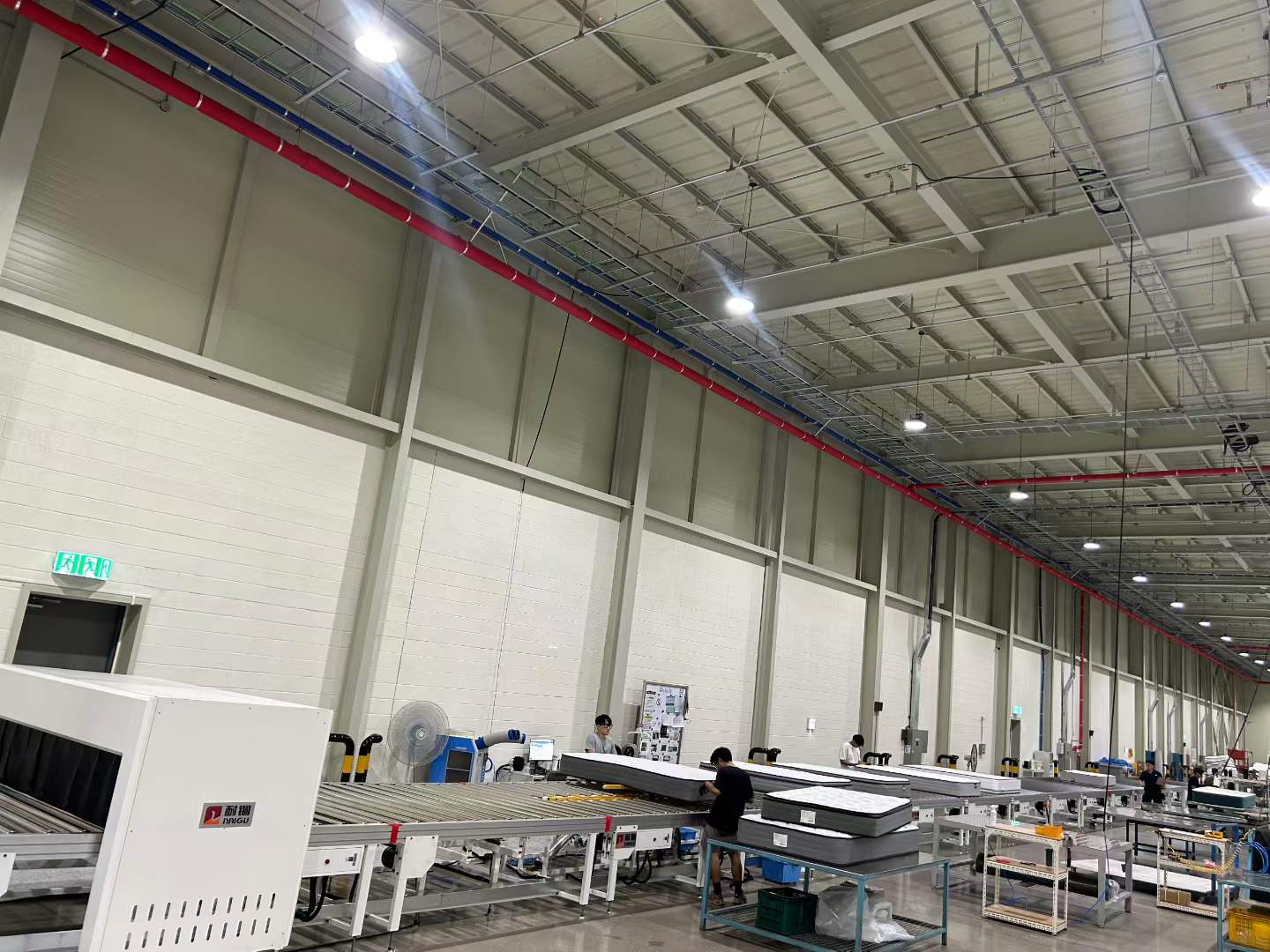
1. From Individual Machines to Connected Production
Traditional mattress factories often operate machines separately, with workers transferring materials between processes. Smart automation allows different stages to work together as a more connected production system.
A modern mattress production workflow may include:
Quilting → Spring Production → Foam Processing → Mattress Assembly → Tape Edging → Inspection → Compression → Roll Packing
Connecting these processes can reduce unnecessary material handling and improve overall production flow.
2. Automation Improves Production Consistency
Manual operations can create variations in production speed, positioning, and finished-product quality. Automated equipment can perform repetitive tasks according to preset parameters.
For example, automated tape edge machines can maintain more consistent sewing operations, while automated compression and roll packing systems can standardize package dimensions and packing procedures.
Consistent processes are especially valuable for mattress manufacturers producing large quantities of the same models.
3. Data Helps Factories Monitor Production
Smart machinery can provide production information that helps factory managers understand how equipment is performing.
Useful production data may include:
-
Machine operating time
-
Production output
-
Equipment stops
-
Maintenance requirements
-
Production cycle information
-
Error or alarm records
By monitoring these indicators, manufacturers can identify recurring production problems and improve equipment utilization.
4. Smart Automation Can Reduce Repetitive Labor
Mattress manufacturing involves many repetitive operations, from material handling and assembly to finishing and packing.
Automation can reduce the amount of manual work required for suitable processes. This does not necessarily mean eliminating workers; instead, operators can spend more time on machine monitoring, quality inspection, material preparation, and production management.
For growing factories, this can make it easier to increase output without increasing manual labor at the same rate.
5. Automated Mattress Packing Supports Logistics Efficiency
Packing is an important part of the overall mattress manufacturing process. Large finished mattresses can require significant warehouse and transportation space.
Compression and roll packing systems can reduce mattress package volume, making handling, storage, and transportation more efficient for suitable mattress products.
For exporters, compact mattress packages can also support more efficient container utilization. The actual result depends on mattress construction, foam characteristics, dimensions, and packing specifications.
6. Automation Supports Flexible Production
Modern mattress factories often produce different mattress sizes, thicknesses, and models. Smart automation can help manufacturers adjust production parameters for different product specifications.
When selecting equipment, manufacturers should consider:
-
Mattress dimensions
-
Mattress thickness
-
Product materials
-
Daily production capacity
-
Product variety
-
Factory layout
-
Required automation level
The goal is not simply to automate as many processes as possible, but to build a system that matches the factory's actual production requirements.
7. Predictive Maintenance Can Reduce Unexpected Stops
Unexpected equipment downtime can interrupt the entire production workflow. Smart monitoring systems can help factories track machine operating conditions and identify maintenance needs earlier.
Combined with scheduled maintenance and operator inspections, this approach can help manufacturers reduce avoidable interruptions and maintain more stable production.
8. Automation Works Best as a Complete Production Strategy
Smart automation is most effective when manufacturers look at the entire production process rather than one machine in isolation.
For example:
Raw Materials → Mattress Production → Inspection → Packing → Compression → Roll Packing → Warehouse → Shipment
Evaluating the connections between each stage can reveal bottlenecks and opportunities to improve material flow, production capacity, and packing efficiency.
Conclusion
Smart automation is transforming mattress manufacturing by connecting production processes, improving consistency, providing useful operational data, reducing repetitive manual work, and supporting more efficient mattress packing.
For manufacturers planning modernization, the starting point should be a clear assessment of production volume, product specifications, current bottlenecks, labor requirements, and future growth plans. With the right combination of automated equipment and workflow design, mattress factories can build a more efficient and scalable production system.


