
Exporting mattresses requires more than just manufacturing a quality product. Proper export packaging is critical to protect mattresses during long-distance transportation, reduce shipping costs, comply with international standards, and enhance brand professionalism. This article explains how mattresses should be packaged for export and what solutions modern factories are adopting.
When mattresses are shipped internationally, manufacturers face several common challenges:
Large volume and high freight cost
Risk of moisture, dust, and contamination
Damage from stacking and long transit times
Different packaging requirements in different markets
Effective packaging must solve all of these issues while remaining cost-efficient.
Flat packing keeps the mattress in its original size and shape.
Advantages:
Suitable for high-end or non-compressible mattresses
No recovery concerns after unpacking
Disadvantages:
Occupies large container space
High shipping and storage costs
Lower container utilization
This method is now mainly used for premium mattresses or short-distance transport.
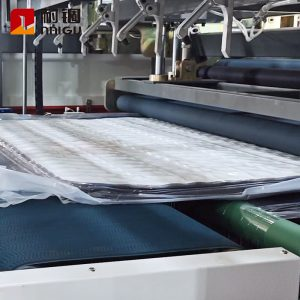
Compressed packing uses a mattress compression packing machine to reduce mattress thickness.
Advantages:
Reduces volume by up to 50–70%
Lower container and shipping costs
Suitable for foam and spring mattresses
Typical materials:
PE or PVC film
Vacuum sealing
Optional carton or pallet packing
This is one of the most popular export solutions worldwide.
Roll packing compresses the mattress and rolls it into a compact cylindrical shape.
Advantages:
Maximizes container loading efficiency
Ideal for e-commerce and bulk export
Easier handling and storage
Best for:
Foam mattresses
Pocket spring mattresses designed for roll packing
Most modern mattress factories choose compression + roll packing for export-oriented production.
Choosing the right materials is essential for durability and compliance:
PE film: Flexible, cost-effective, moisture-resistant
PVC film: Stronger protection, better shape retention
Vacuum bags: Essential for compression packing
Woven bags or cartons: Added protection and branding
Desiccants: Prevent moisture during sea transport
Packaging materials should meet destination country regulations and customer expectations.
Manual packing is no longer efficient for export-scale production. Automated solutions provide:
Consistent packing quality
Lower labor costs
Faster packing speed
Better compatibility with export standards
An automatic mattress compression roll packing machine or a complete mattress packing line is now standard equipment for export-focused factories.
Europe & North America: Prefer roll-packed mattresses for logistics efficiency
South America & Africa: Focus on cost-effective compression packing
Asia & Middle East: Mixed demand, depending on retail vs wholesale channels
Understanding your target market helps you choose the right packaging strategy.
Looking for a professional mattress compression and packing solution for export markets?
NAIGU provides automatic mattress packing machines and complete production lines tailored for global manufacturers.
👉 Contact us today to get technical details, packing recommendations, and a customized quotation.
📧 Email: jenney@gdnaimei.com
📱 WhatsApp/Phone: +86 13924835577
🌐 Website: https://naigumattressmachine.com

