
Sponge and foam products are widely used in mattresses, sofas, cushions, and packaging. For manufacturers and exporters, compressing sponge without permanent deformation is essential to reduce shipping volume while maintaining product quality. This article explains how sponge compression works, why deformation occurs, and how modern technology prevents it.
Sponge deformation usually happens due to improper compression methods or poor material recovery conditions. The most common causes include:
Excessive or uneven pressure
Inadequate vacuum control
Low-density or poor-quality foam structure
Long compression time without proper sealing
Incorrect release (rebound) process
Understanding these factors is the first step to preventing damage.
High-quality sponge has elastic memory, meaning it can return to its original shape after compression if:
Compression pressure stays within material limits
Air is removed evenly from the foam cells
Compression time is controlled
The sponge is allowed sufficient recovery time after unpacking
Professional compression focuses on volume reduction without breaking the internal cell structure.
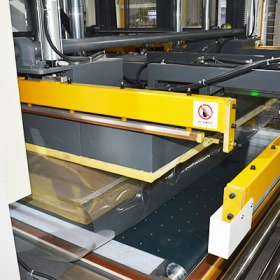
A sponge compression packing machine applies pressure gradually and evenly across the entire surface.
Benefits:
Uniform force distribution
Adjustable compression ratio
Stable and repeatable results
Manual compression often causes uneven stress, leading to permanent deformation.
Vacuum compression removes air from the sponge cells before full compression.
Why vacuum matters:
Reduces internal resistance
Prevents sudden cell collapse
Protects foam elasticity
Vacuum compression is the most reliable method for long-distance transportation.
Different sponge densities require different compression levels.
| Sponge Density | Recommended Compression |
|---|---|
| Low density | Light compression only |
| Medium density | Standard vacuum compression |
| High density | Higher compression possible |
Over-compressing low-density sponge is a common cause of deformation.
Packaging materials play a critical role in shape retention.
Recommended materials:
High-quality PE or PVC film
Airtight vacuum bags
Strong sealing to maintain pressure
Poor film quality can cause air leakage, leading to uneven rebound.
Even high-quality sponge should not remain compressed indefinitely.
Best practices:
Keep compression time as short as possible
Avoid high-temperature storage
Follow recommended storage duration based on sponge type
Proper rebound is just as important as compression.
After unpacking:
Place sponge on a flat surface
Allow 24–72 hours for full recovery
Avoid immediate heavy loading
Most export-grade sponge recovers over 95–99% of its original shape when compressed correctly.
Modern factories rely on automatic sponge compression and roll packing machines to ensure consistency.
Advantages:
Precise pressure and vacuum control
Reduced labor cost
Stable quality for export orders
Ideal for mattresses, sofa foam, and cushions
Automation ensures sponge compression is safe, repeatable, and deformation-free.
Looking for a reliable sponge compression packing solution for mattresses or sofas?
NAIGU provides automatic sponge compression and roll packing machines designed to protect foam elasticity and reduce shipping costs.
👉 Contact us today for technical details, sample testing, and customized solutions.
📧 Email: jenney@gdnaimei.com
📱 WhatsApp/Phone: +86 13924835577
🌐 Website: https://naigumattressmachine.com

