Categories
Complete Mattress Machinery Solutions for Export Manufacturers |NAIGU
A complete mattress machinery solution helps export manufacturers connect production, quality control, compression, and packing into an efficient workflow. This article explains how integrated mattress machinery can improve production capacity, reduce labor requirements, maintain quality consistency, and support international shipping.
Sep 9th,2026
58 Views
For mattress manufacturers serving international markets, building an efficient production system requires more than purchasing individual machines. Export businesses often need consistent product quality, reliable production capacity, efficient packing, and flexible equipment that can support different mattress specifications.
A complete mattress machinery solution can help export manufacturers connect key production processes, improve efficiency, and prepare finished mattresses for domestic and international distribution.
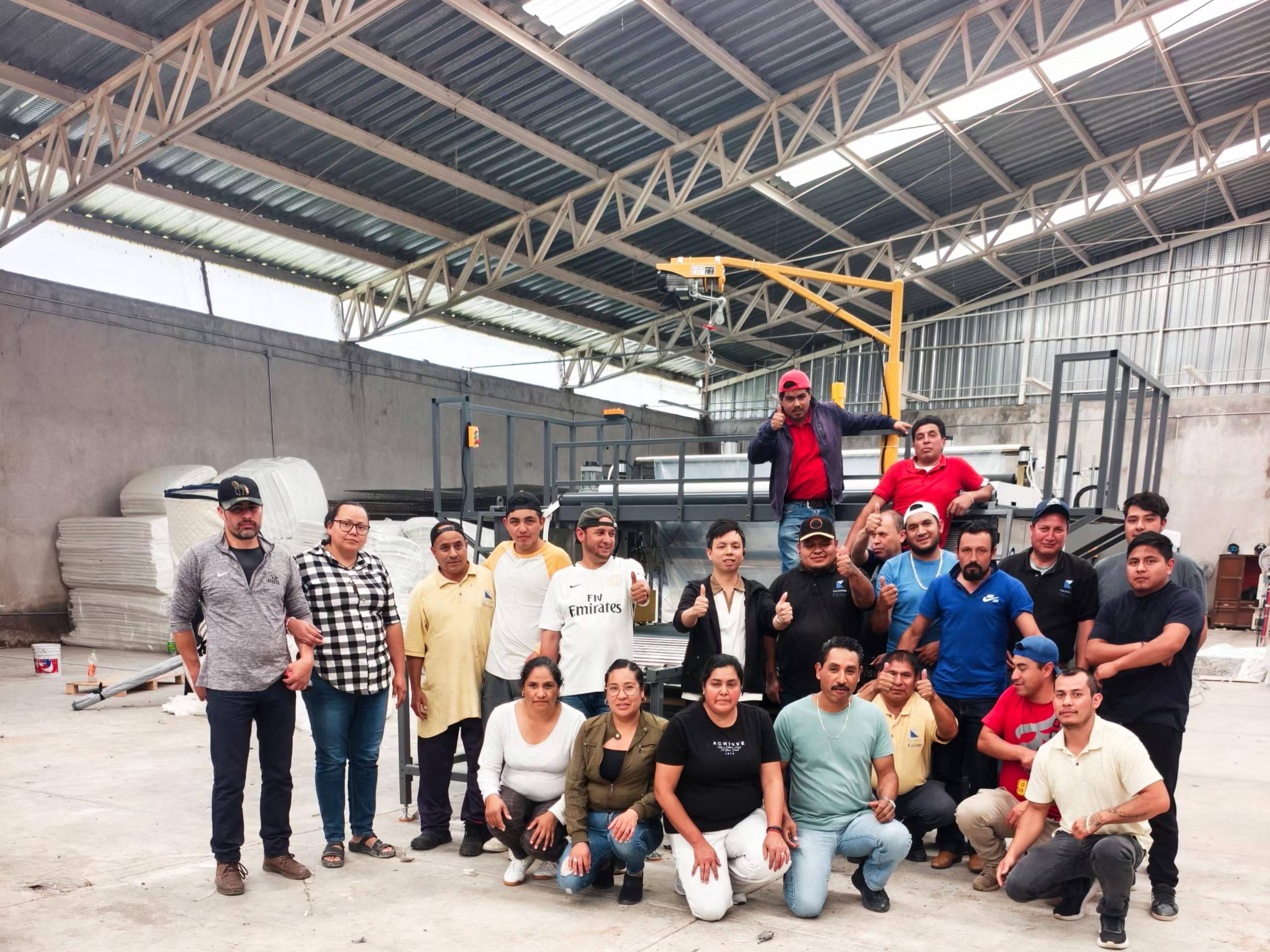
What Is a Complete Mattress Machinery Solution?
A complete mattress machinery solution combines multiple types of equipment to cover important stages of mattress manufacturing.
Depending on the factory's products and production capacity, a mattress production system may include:
-
Mattress quilting machines
-
Mattress cutting equipment
-
Spring production machines
-
Foam processing equipment
-
Mattress assembly equipment
-
Mattress tape edge machines
-
Mattress flipping or handling systems
-
Mattress compression machines
-
Mattress packing machines
-
Conveyors and transfer systems
The exact configuration should be based on mattress type, production volume, factory layout, and target markets.
1. Build a More Efficient Production Workflow
Export manufacturers often handle large and recurring orders. A well-designed production line helps materials and semi-finished mattresses move smoothly from one process to the next.
An integrated workflow can reduce unnecessary product movement, waiting time, and manual handling.
A typical process may look like:
Material Preparation → Quilting → Cutting → Spring/Foam Processing → Mattress Assembly → Tape Edging → Quality Inspection → Compression → Packing → Warehouse → Shipping
Connecting these stages can help manufacturers create a more stable production process.
2. Improve Production Capacity
Export orders may require manufacturers to produce large quantities within fixed delivery schedules.
Appropriate machinery can increase production output while reducing dependence on repetitive manual operations.
Instead of simply selecting the fastest machine, manufacturers should consider the capacity of the entire production line. A bottleneck in one stage can limit the output of all other processes.
For this reason, production capacity should be evaluated across the complete workflow.
3. Improve Mattress Quality Consistency
International buyers often expect stable product quality across repeated orders.
Automated and properly configured machinery can help standardize key production processes. Consistent quilting, cutting, tape edging, assembly, compression, and packing can reduce variations between production batches.
Quality consistency is especially important when mattresses are supplied to wholesalers, distributors, retailers, and overseas brands.
4. Include the Right Mattress Packing Equipment
Packing is an important part of an export-oriented mattress production line.
A mattress packing machine can help automate or assist with film feeding, compression, wrapping, sealing, and finished-package handling.
For suitable mattress types, compression packing can reduce product volume and help improve container utilization.
For exporters, this can make the final production stage more closely connected to warehouse and shipping requirements.
5. Mattress Compression for Export Logistics
Mattresses are bulky products, so transportation volume can have a significant impact on logistics efficiency.
A mattress compression machine can reduce the volume of suitable mattresses before packing. Depending on mattress construction and compression performance, the final package may occupy substantially less space than the original product.
This can help manufacturers optimize:
-
Container loading
-
Warehouse storage
-
Finished-product handling
-
Long-distance transportation
-
Distribution efficiency
Actual results depend on the mattress materials and should be confirmed through testing.
6. Automation Helps Manage Labor Costs
Labor is an important consideration for growing mattress factories.
Automation can reduce repetitive tasks such as material feeding, mattress handling, tape edging, compression, and packing.
Factories do not necessarily need to automate every process at once. Semi-automatic equipment can be a practical starting point, while larger manufacturers can gradually develop more integrated automatic production systems.
7. Flexible Equipment for Multiple Mattress Specifications
Export manufacturers may produce different mattress sizes and thicknesses for different markets.
A suitable mattress machinery solution should provide enough flexibility to handle the required product range.
Before purchasing equipment, manufacturers should define:
-
Mattress width and length
-
Mattress thickness range
-
Mattress materials
-
Daily production volume
-
Required packing method
-
Expected product changes
-
Future production expansion
Equipment should be selected according to actual manufacturing requirements rather than based only on individual machine specifications.
8. Design the Factory Layout Around Material Flow
A complete mattress production solution should consider factory layout from the beginning.
Machines should be arranged according to the production sequence, with sufficient space for operators, materials, semi-finished products, and finished mattresses.
A well-planned layout can reduce unnecessary movement and make material flow easier to monitor.
For automated factories, conveyors and transfer systems can further improve connections between production stages.
9. Prepare Machinery for International Export Requirements
Export manufacturers should also consider equipment requirements beyond production performance.
Important factors may include:
-
Electrical standards
-
Machine safety requirements
-
Installation conditions
-
Spare parts availability
-
Technical documentation
-
Remote support
-
Installation and commissioning
-
Operator training
-
After-sales service
A reliable machinery supplier should be able to communicate clearly about these requirements before shipment.
10. Scale the Production Line as the Business Grows
A complete mattress machinery solution does not always need to be installed in a single step.
For a growing factory, a phased approach may be more practical.
For example, a manufacturer can first improve key production bottlenecks, then add automated handling, compression, packing, and other equipment as order volume increases.
This allows the factory to improve productivity while keeping equipment investment aligned with business growth.
How to Choose a Mattress Machinery Supplier
When selecting a supplier for an export-oriented mattress production line, manufacturers should evaluate more than machine price.
Consider:
Manufacturing Experience
A supplier with experience in mattress machinery should understand different production processes and equipment configurations.
Complete Solution Capability
A supplier that can provide multiple production and packing machines can make system integration and technical communication easier.
Product Testing
Testing mattresses before finalizing machine specifications can help confirm production compatibility.
Technical Support
Installation, commissioning, operator training, spare parts, and after-sales support are important for international factories.
Customization
Different factories have different production volumes, mattress sizes, and layouts. Equipment should be configurable according to actual requirements.
Conclusion
For export manufacturers, a complete mattress machinery solution can help connect production, quality control, compression, and packing into one more efficient workflow.
By selecting suitable equipment for each production stage, manufacturers can improve capacity, reduce repetitive labor, maintain consistent quality, optimize warehouse and transportation efficiency, and prepare their factories for future growth.
The right solution depends on mattress specifications, production volume, factory layout, automation goals, and export requirements.
NAIGU provides mattress production, compression, and packing machinery solutions for manufacturers serving international markets.
Contact NAIGU to discuss a complete mattress machinery solution designed for your export business.
📧 Email: jenney@gdnaimei.com
📱 WhatsApp/Phone: +86 13924835577
🌐 Website: https://naigumattressmachine.com


