Categories
Common Tape Edge Sewing Problems and Solutions |NAIGU
Tape edge sewing is essential for achieving strong, neat, and consistent mattress edges. This article covers common tape edge sewing problems, their possible causes, and practical solutions to improve sewing quality, reduce downtime, and maintain efficient mattress production.
Sep 9th,2026
69 Views
Tape edging is an important finishing process in mattress manufacturing. It connects the mattress border to the top and bottom panels, helping create a clean appearance and a durable finished edge.
However, sewing problems can affect mattress quality, production efficiency, and material consumption. Understanding the most common tape edge sewing issues can help manufacturers maintain stable production and reduce unnecessary downtime.
What Is Tape Edge Sewing?
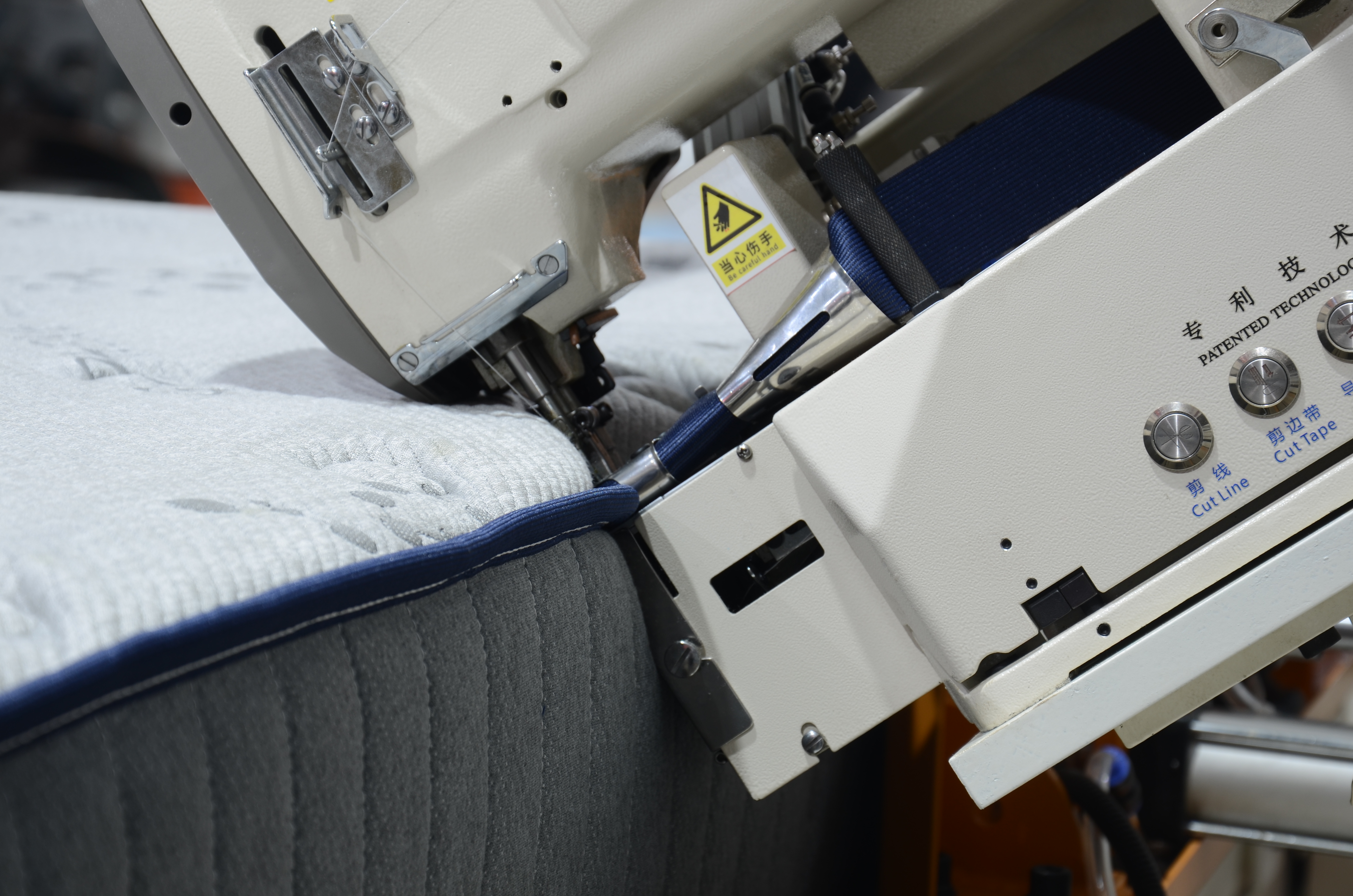
Tape edge sewing is the process of attaching tape around the perimeter of a mattress using a mattress tape edge machine.
The machine typically guides the mattress and tape while stitching around the edges. The quality of the finished seam depends on factors such as machine settings, needle and thread selection, mattress construction, operator technique, and maintenance.
1. Uneven or Wavy Stitching
Uneven stitching is one of the most common tape edge sewing problems. The seam may appear wavy or inconsistent around the mattress perimeter.
Possible Causes
Incorrect machine adjustment
Uneven mattress positioning
Inconsistent feeding
Incorrect presser-foot pressure
Worn machine components
Operator handling issues
Solutions
Check the machine alignment and feeding system first. Make sure the mattress is positioned correctly and moves smoothly through the sewing area.
Regular maintenance of guides, wheels, and other feeding components can also help improve stitching consistency.
2. Thread Breakage
Frequent thread breakage can interrupt production and reduce sewing efficiency.
Possible Causes
Incorrect thread tension
Unsuitable thread size
Damaged or incorrectly installed needle
Poor-quality thread
Excessive sewing speed
Incorrect machine threading
Solutions
Check the upper and lower thread paths and adjust thread tension according to the selected thread and material.
The needle should also be replaced regularly and installed correctly. Using thread suitable for mattress tape edging can help reduce unnecessary breakage.
3. Loose Stitches
Loose stitches can weaken the seam and create an uneven finished appearance.
Possible Causes
Incorrect thread tension
Incorrect bobbin adjustment
Improper threading
Inconsistent material feeding
Solutions
Check both upper-thread and bobbin-thread tension. Make sure the thread is correctly installed and that the material is feeding evenly.
Testing the machine on a sample mattress panel before full production can help identify the correct settings.
4. Needle Breakage
Broken needles can stop production and may damage the material.
Possible Causes
Incorrect needle size
Needle installed incorrectly
Mattress material is too resistant
Sewing speed is too high
Needle hits a hard component
Solutions
Select the appropriate needle for the mattress construction and sewing application. Inspect needle alignment and replace bent or damaged needles immediately.
Machine speed should also be matched to the material and production conditions.
5. Tape Misalignment
The tape may not remain correctly positioned along the mattress edge, resulting in an uneven finished appearance.
Possible Causes
Improper tape feeding
Incorrect guide adjustment
Mattress edge not positioned correctly
Inconsistent operator control
Solutions
Adjust the tape guide and feeding system to ensure stable tape movement. Operators should also maintain consistent mattress positioning during the sewing process.
For factories handling high production volumes, a properly maintained automatic or semi-automatic tape edge sewing system can improve consistency.
6. Stitching Skips
Skipped stitches can occur when the needle fails to form a complete stitch during sewing.
Possible Causes
Blunt or damaged needle
Incorrect needle position
Improper thread tension
Unsuitable needle and thread combination
Incorrect machine timing
Solutions
Start by replacing the needle and checking its installation. If the problem continues, inspect machine timing and thread tension.
Persistent skipped stitches may require professional machine adjustment or technical maintenance.
7. Uneven Mattress Corners
Mattress corners can be more difficult to sew because the machine needs to change direction smoothly.
Possible Causes
Incorrect corner handling
Incorrect machine speed
Uneven material feeding
Poor alignment
Solutions
Control the mattress movement carefully when approaching corners and use suitable machine settings.
Operators should also receive training on how to guide the mattress smoothly through corner sections.
8. Poor Seam Appearance
A seam may be technically secure but still have an inconsistent or unattractive appearance.
Possible Causes
Uneven tape tension
Inconsistent stitches
Incorrect thread selection
Improper machine settings
Worn sewing components
Solutions
Standardize machine settings and regularly inspect finished mattresses.
Factories producing mattresses for export or premium markets should establish clear quality standards for stitch spacing, seam alignment, tape position, and corner appearance.
9. Excessive Machine Downtime
Frequent machine stops can reduce overall production efficiency.
Common Causes
Lack of preventive maintenance
Thread and needle problems
Worn feeding components
Incorrect machine settings
Delayed replacement of spare parts
Solutions
Preventive maintenance is often more effective than waiting for equipment failure.
Factories should establish regular inspection schedules for needles, thread paths, guides, bearings, belts, and other wear components.
How to Prevent Tape Edge Sewing Problems
A stable tape edging process starts with suitable equipment and proper operating procedures.
Manufacturers can improve reliability by:
Using suitable materials: Choose compatible tape, thread, and needles for the mattress construction.
Standardizing machine settings: Establish appropriate settings for different mattress sizes and materials.
Training operators: Ensure operators understand threading, tension adjustment, mattress positioning, and basic troubleshooting.
Performing preventive maintenance: Inspect and replace wear parts before they cause production interruptions.
Checking finished mattresses: Regular quality inspections can identify sewing problems before large batches are completed.
Choosing a Mattress Tape Edge Machine
For manufacturers planning to purchase or upgrade equipment, the machine should match the factory's actual production requirements.
Important factors include:
Mattress size range
Mattress thickness
Production capacity
Sewing speed
Automation level
Tape specifications
Thread requirements
Operator requirements
Machine durability
Technical and after-sales support
A suitable mattress tape edge machine can help factories improve sewing consistency, reduce repetitive labor, and increase production efficiency.
Conclusion
Tape edge sewing problems can affect mattress appearance, seam strength, production speed, and material usage. Issues such as thread breakage, skipped stitches, tape misalignment, uneven stitching, and needle breakage can often be reduced through correct machine settings, suitable sewing materials, operator training, and preventive maintenance.
For mattress manufacturers, investing in reliable mattress tape edge sewing equipment and establishing standardized operating procedures can help create a more stable and efficient production process.
NAIGU provides mattress manufacturing equipment and tape edge sewing solutions for factories with different mattress sizes and production requirements.


