Categories
How Mattress Film Packing Technology Supports Export Shipping |NAIGU
Learn how mattress film packing technology supports export shipping through product protection, compression packing, consistent package quality, efficient container loading, and suitable film selection.
Oct 15th,2026
11 Views
How Mattress Film Packing Technology Supports Export Shipping
For mattress manufacturers serving international markets, export shipping involves more than moving products from one country to another. Mattresses must be packed to protect them during handling, storage, container loading, and long-distance transportation while making efficient use of shipping space.
Mattress film packing technology helps manufacturers address these challenges through suitable plastic films, compression methods, and automated packing equipment. Choosing the right combination can improve packing consistency and support more efficient export operations.
1. Protect Mattresses During Long-Distance Transportation
During export shipping, mattresses may pass through multiple handling stages, including factory loading, container transportation, port handling, and warehouse storage. Dust, moisture exposure, and surface contamination can affect product condition if protection is inadequate.
Suitable mattress packing film creates a protective barrier against dust and everyday handling contamination. The film should match the mattress dimensions, packing method, and expected transportation conditions.
For overseas shipments, manufacturers should also consider carton protection, palletization, container conditions, and local import requirements where applicable. Plastic film alone does not guarantee complete protection against moisture or physical damage.
2. Reduce Shipping Volume Through Compression Packing
Mattresses can occupy substantial space when shipped in their original form. For compatible mattress constructions, compression packing machines reduce mattress thickness before the product is wrapped or sealed with film.
Roll packing technology can further reduce the packed dimensions of suitable mattresses, potentially allowing more products to fit into a shipping container.
The actual space savings depend on mattress materials, thickness, dimensions, compression limits, and the selected packing process. Manufacturers should test representative mattress samples before deciding on a packing method for export orders.
3. Improve Packing Consistency for Export Orders
International buyers often expect consistent product dimensions, package appearance, and packing quality across large orders. Manual packing may produce variations in film tightness, sealing, and package dimensions.
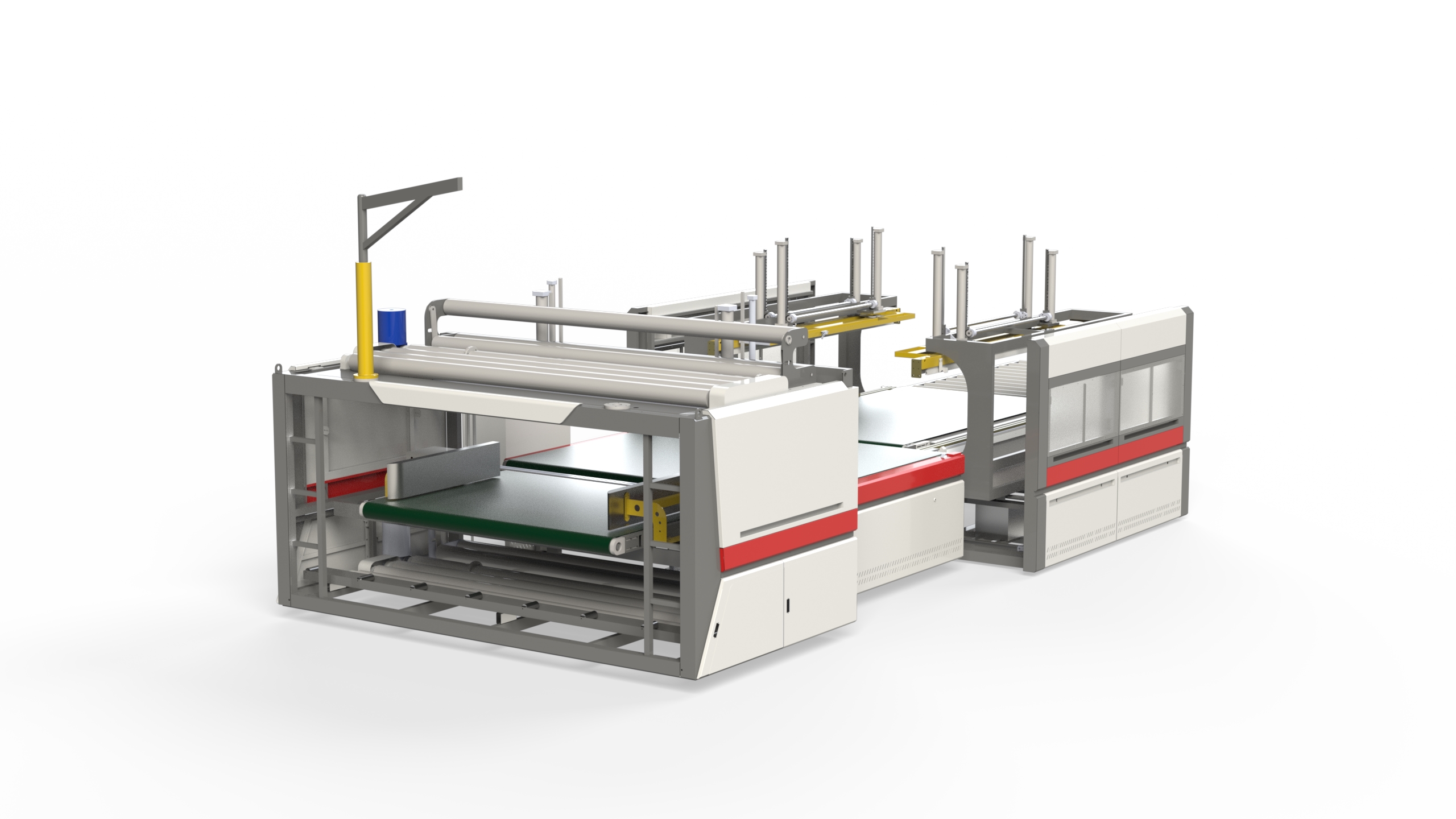
Automatic mattress film packing machines help standardize key operations, such as film feeding, wrapping, heat sealing, and cutting, depending on the machine configuration.
More consistent packing can simplify finished-product inspection, warehouse handling, and order preparation. Regular machine maintenance and correct operating parameters remain important for maintaining stable results.
4. Select the Right Film for Mattress Export Shipping
Film selection directly affects packing performance. A film that is too thin or unsuitable for the application may tear during handling, while an inappropriate film structure may not perform well under the selected compression and sealing conditions.
When choosing mattress packing film, manufacturers should evaluate:
-
Film thickness: Match the film to mattress weight, surface characteristics, and packing conditions.
-
Tensile and puncture resistance: Consider the stresses created during wrapping, compression, handling, and transportation.
-
Sealing performance: Ensure the film is compatible with the machine's sealing method and operating temperature.
-
Film width and dimensions: Select a suitable size for the mattress and packing machine.
-
Material compatibility: Confirm that the film performs appropriately with the mattress construction and selected packing process.
Testing the film with the actual machine and mattress is recommended before placing a large export order.
5. Support More Efficient Container Loading and Warehousing
Compressed and roll-packed mattresses can be easier to stack, store, and handle than unpacked mattresses, provided the package design is suitable for the intended logistics process.
By reducing the packed volume of compatible products, manufacturers may improve container utilization and lower transportation costs per mattress. Compact packing can also help distributors and importers manage warehouse space more efficiently.
However, container loading efficiency depends on the final package dimensions, container type, stacking limitations, and shipment configuration. Buyers should calculate loading plans using actual packed measurements rather than relying only on estimated compression ratios.
6. Reduce Repetitive Work in High-Volume Export Production
Manufacturers handling frequent export orders may need to pack hundreds or thousands of mattresses within defined production schedules. Automatic film packing equipment can reduce repetitive manual work and help maintain a more predictable packing workflow.
Depending on production requirements, factories may choose semi-automatic packing machines, automatic compression and roll packing machines, or integrated packing lines.
The appropriate solution depends on daily output, mattress specifications, labor availability, available floor space, and the required level of automation.
7. Prepare Mattresses for Different Export Markets
Export buyers may have different requirements for package dimensions, labeling, material specifications, and delivery methods. Products shipped to distributors may require different handling arrangements from mattresses sold through online retail channels.
Before confirming an export packing solution, manufacturers should clarify:
-
Required packed dimensions and packing format
-
Mattress quantity and shipment frequency
-
Film specifications and printing requirements
-
Labeling and outer-package requirements
-
Container loading and handling conditions
-
Destination-market rules and buyer-specific requirements
Confirming these details early helps manufacturers select suitable film and machinery while reducing the risk of packing changes late in production.
How to Improve Mattress Film Packing for Export Shipping
A practical approach is to evaluate the complete packing process rather than focusing on film or machinery alone. Manufacturers should test the film, compression settings, sealing quality, final package dimensions, and handling performance together.
For high-volume production, automatic mattress packing equipment can help standardize the process, while appropriate film selection supports package integrity during transportation. Combining these factors helps manufacturers develop a packing solution that meets both production needs and export requirements.
Contact NAIGU for Mattress Packing Solutions
NAIGU provides mattress packing machinery and packing solutions for manufacturers serving domestic and international markets. From mattress compression and roll packing to film wrapping and sealing, suitable equipment can be selected according to mattress specifications, production capacity, and export requirements.
Contact NAIGU to discuss your mattress packing needs and find a suitable solution for your export business.


